
Observation details: asteroid Athamantis

Daily motion of Athamantis
230 Athamantis will remain visible until May 5, when it moves too close to the Sun and temporarily disappears from the night sky.
Athamantis visibility on 2026-10-17
Athamantis Visible from before midnight until sunrise
Athamantis rise and set timetable
| Time | Elevation | |
Moonrise, 25.9% illuminated 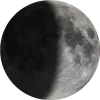 | 11:16 | -11° |
| Astronomical observing session begins | 17:55 | -15° |
| Athamantis rise | 19:31 | |
| Moonset | 20:29 | 10° |
| Athamantis transit | 02:47 | 76° |
| Astronomical observing session ends | 03:51 | 70° |
| Twilight end (−12°) | 04:21 | 65° |
| Civil sunrise | 04:51 | 60° |
| Sunrise | 05:19 | 55° |
| Athamantis set | 10:02 |
Track Athamantis position throughout the night
← 17 October 2026 →
| Time | |
| Altitude | |
| Azimuth |
Shift the map to change the time and observe Athamantis changing position in the night sky.
Athamantis Description
This asteroid is designated 230 Athamantis, main-belt asteroid Its diameter is approximately 112 km. 230 Athamantis completes an orbit around the Sun in 3.7 years. It is currently 1.573 AU (235,345,874 km) from Earth, and is located in the constellation Taurus.Current position in the Solar System: Athamantis
| Date | Sat, 17 October 2026 |
| Distance from Earth | 1.57319 AU (235,345,874km) |
| Elongation | 122° |
| Angular diameter | " |
| Magnitude | 11.1 |
Finder Chart for
Double-click to unlock the map.
| Object name | |
| Field of view | |
| Limiting magnitude | |
| coordinates | 5.3885, 23.26511 |
| Center coordinates | 5.3885, 23.26511 |
Annual motion of Athamantis
| Date | Sun, 18 October 2026 |
| Twilight start | 17:54 |
| Twilight end | 03:49 |
| Twilight duration | 10h 55m |
| Rise | 19:28 |
| Set | 09:58 |
| Elevation at transit | 76° |
| Transit time | 02:43 |
| Equatorial coordinates | RA: 05h 23m 29s", Dec: 23° 11' 52s |
| Magnitude | 11 |
| Constellation | Taurus |
The graph summarizes the object’s annual visibility, daily observing windows and transit times.
The vertical axis shows time of day and the horizontal axis shows the days of the year.
The shaded area marks when the object is above the horizon; the white line marks daily transit. You can also view the detailed annual visibility table.
The vertical axis shows time of day and the horizontal axis shows the days of the year.
The shaded area marks when the object is above the horizon; the white line marks daily transit. You can also view the detailed annual visibility table.
Astrometric and Physical Parameters of 230 Athamantis
Coordinates and Visibility
| Right Ascension | 05h 23m 19s |
| Declination | 23° 15′ 54″ |
| Magnitude | 11.1 |
| Constellation | Taurus |
| Elevation | 15.6° |
| Azimuth | 72.4° |
Acknowledgments
Orbital and small-body data are provided by NASA Jet Propulsion Laboratory (JPL) Small-Body Database (SBDB) and Center for Near-Earth Object Studies (CNEOS). These resources support accurate positions, orbits and physical characteristics.