
Asterope Position and Visibility Tonight

Where is Asterope right now?
Asterope is located in the constellation Taurus. It is currently above the horizon at an altitude of 41° toward the east, with an apparent magnitude of 5.75.
Asterope visibility on 2026-10-31
Asterope Visible from evening until sunrise
Asterope rise and set timetable
| Time | Elevation | |
| Asterope rise | 14:10 | |
| Twilight start (−12°) | 14:31 | 3° |
| Astronomical observing session begins | 15:03 | 9° |
Moonrise, 70.7% illuminated 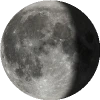 | 17:22 | 35° |
| Asterope transit | 21:39 | 75° |
| Astronomical observing session ends | 01:28 | 40° |
| Twilight end (−12°) | 02:00 | 34° |
| Civil sunrise | 02:31 | 28° |
| Sunrise | 03:01 | 22° |
| Asterope set | 05:08 | |
| Moonset | 09:05 | -25° |
Track Asterope position throughout the night
← 31 October 2026 →
| Time | |
| Altitude | |
| Azimuth |
Shift the map to change the time and observe Asterope changing position in the night sky.
Star system description: Asterope
A double or multiple star system in Taurus.
Pair AB (149.6″; magnitudes 5.75 and 6.42) is the binocular candidate in the catalog model. Actual resolution depends on magnification and stability.
The diagram uses the latest WDS measurements; north is up and east is right. Measurements may be from different years. Unconnected groups are arranged separately; close pairs may merge, and pairs without reliable geometry are omitted.
Technical details: Asterope
| Property | Value |
|---|---|
| System identifier | WDS 03459+2433 |
| Bayer / Flamsteed designation | 21 Tau |
| Constellation | Taurus |
| System type | multiple star system |
| Right ascension (RA) | 03h 45m 54s" |
| Declination (Dec) | 24° 33' 16s |
| Component | AB |
| Primary magnitude | 5.75 |
| Secondary magnitude | 6.42 |
| Separation (arcseconds) | 149.6″ |
| Position angle | 130° |
| Discovery year | 1894 |
| Last observed | 2015 |
| Spectral type (primary/secondary) | B8V |
| Number of observations | 24 |
6 components are identified in WDS; this is not a count of resolved stars.
Components of Asterope
Each row is a separate WDS component pair. Measurements may come from different years.
| Component | Primary magnitude | Secondary magnitude | Separation (arcseconds) | Position angle | Last observed |
|---|---|---|---|---|---|
| AB (binoculars) | 5.75 | 6.42 | 149.6″ | 130° | 2015 |
| AD | 5.75 | 12.70 | 170.5″ | 74° | 2015 |
| Ba,Bb | 7.30 | 7.30 | 0.1″ | — | 1934 |
| BC | 6.42 | 15.10 | 51.4″ | 267° | 2015 |
| DE | 12.70 | 12.96 | 17.5″ | 162° | 2015 |
Notes
- V: Proper motion indicates a physical pair.
Data source: Washington Double Star (WDS) Catalog. Maintained by the U.S. Naval Observatory; thanks to the WDS team.
Finder Chart for Asterope
Asterope Passage Through Night
Double-click to unlock the map.
Current position of Asterope
| Time | 17:54 |
| Latitude | 39.9612 |
| Longitude | -82.9988 |
| Elevation | 41° |
| Azimuth | 90° |
Here you can see the current position of Asterope on the map, as well as its positions for rise and set. This tool lets you track its movement throughout the night with accurate, up-to-date information.
When Is Asterope Visible Throughout the Year?
Asterope will remain visible until April 7, when it moves too close to the Sun and temporarily disappears from the night sky.
| Date | Sun, 1 November 2026 |
| Astronomical observing session begins | 15:02 |
| Astronomical observing session ends | 01:27 |
| Astronomical observing duration | 10h 25m |
| Rise | 14:06 |
| Set | 05:04 |
| Elevation at transit | 75° |
| Transit time | 21:35 |
| Equatorial coordinates | RA: 03h 45m 54s", Dec: 24° 33' 16s |
| Magnitude | 6 |
| Constellation | Taurus |
The graph illustrates the annual visibility pattern of Asterope, including its daily appearances and transit times. The vertical axis shows the hours of the day and the horizontal axis spans the year. The reddish area marks when the object is above the horizon, while the white line marks its daily transit.
You can also see when Asterope is visible throughout the year in a table with exact rise, transit, and set times for each date.
You can also see when Asterope is visible throughout the year in a table with exact rise, transit, and set times for each date.
Astrometric and Physical Parameters of Asterope
Coordinates and Visibility
| Right Ascension | 03h 45m 54s |
| Declination | 24° 33′ 16″ |
| Magnitude | 5.75 |
| Constellation | Taurus |
| Elevation | 40.6° |
| Azimuth | 90.3° |