
Double Star 21145+1000 Position and Visibility Tonight
Where is 21145+1000 right now?
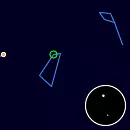
21145+1000 is located in the constellation Equuleus. Although it is currently above the horizon at an altitude of 56 degrees, 21145+1000 is not visible because it is daytime.
Twilight begins at 03:30 local time, and at that moment, 21145+1000 will appear at an altitude of 56 degrees toward the southeast.
Twilight begins at 03:30 local time, and at that moment, 21145+1000 will appear at an altitude of 56 degrees toward the southeast.
21145+1000 Visibility on June 27
21145+1000 is visible in the evening sky until midnight
21145+1000 Rise and Set Timetable
| Time | Elevation | |
Moon Rise, 91.9% illuminated  | 16:14 | -33° |
| 21145+1000 rise | 19:30 | |
| Twighlight start | 19:42 | 2° |
| Astrosession begin | 20:26 | 11° |
| Moon Set | 01:36 | 62° |
| Astrosession end | 01:55 | 63° |
| 21145+1000 transit | 02:00 | 63° |
| Twighlight end | 02:39 | 61° |
| Civil sunrise | 03:18 | 57° |
| Sunrise | 03:50 | 53° |
| 21145+1000 set | 08:29 |
Track 21145+1000 Position Throughout the Night
← Sat, 27 June 2026 →
| Time | |
| Altitude | |
| Azimuth |
Shift the map to change the time and observe 21145+1000 changing position in the night sky.
21145+1000 Star System Description
21145+1000 is Triple Star System located in constellation Equuleus at coordinates RA: 21h 14m 28s", Dec: 10° 00' 25s.
The primary component has a magnitude of 5.19, while the secondary component has a magnitude of 5.52. They are separated by 0.4 arcseconds at a position angle of 15 degrees. The brightness difference between the two components is 0.33 magnitudes, with the primary component being approximately 1.4 times brighter than the secondary.
The primary and secondary stars are both yellow-white in color
Below is a table with star system details from the Washington Double Star (WDS) Catalog. This catalog is a comprehensive source of information on double and multiple star systems, providing key data on the positions, magnitudes, and separations of stellar components.
The primary component has a magnitude of 5.19, while the secondary component has a magnitude of 5.52. They are separated by 0.4 arcseconds at a position angle of 15 degrees. The brightness difference between the two components is 0.33 magnitudes, with the primary component being approximately 1.4 times brighter than the secondary.
The primary and secondary stars are both yellow-white in color
Below is a table with star system details from the Washington Double Star (WDS) Catalog. This catalog is a comprehensive source of information on double and multiple star systems, providing key data on the positions, magnitudes, and separations of stellar components.
Technical Details of Star System 21145+1000
| Property | Value |
|---|---|
| Star System Identifier | 21145+1000 |
| System Type | Triple Star System |
| Primary Star | del Equ |
| Right Ascension (RA) | 21.24133 (21h 14m 28s") |
| Declination (Dec) | 10.00697 (10° 00' 25s) |
| Magnitude (Primary) | 5.19 |
| Magnitude (Secondary) | 5.52 |
| Spectral Type (Primary/Secondary) | F6V+F6V (yellow-white/yellow-white) |
| Separation (Arcseconds) | 0.4 |
| Position Angle | 15° |
| Discovery Year | 1852 |
| Last Observed | 2022 |
| Primary Proper Motion (Ra, Dec) | +040-304 |
| Secondary Proper Motion (Ra, Dec) | |
| Number of Observations | 523 |
21145+1000 Components
| Component | Magnitude | Separation (arcseconds) | Position Angle |
| AB | 5.52 | 0.4 | 15 |
| AB,C | 10.17 | 19.5 | 78 |
The data presented in this table is sourced from the Washington Double Star (WDS) Catalog, a comprehensive repository of double and multiple star system information maintained by the U.S. Naval Observatory. We thank the WDS team for their continued efforts in providing accurate and detailed astronomical data.
Finder Chart for del Equ
Double-click to unlock the map.
| Object name | 21145+1000 |
| Field of view | |
| Limiting magnitude | |
| 21145+1000 coordinates | 21.24133, 10.00697 |
| Center coordinates | 21.24133, 10.00697 |
21145+1000 Passage Through Night
Double-click to unlock the map.
Current position of 21145+1000
| Time | 03:30 |
| Latitude | 37.3541 |
| Longitude | -121.955 |
| 21145+1000 elevation | 56° |
| 21145+1000 Azimuth | 138° |
Here you can see the current position of the 21145+1000 on the map, as well as its positions for rise and set. This tool allows you to track the 21145+1000's movement throughout the night, providing you with accurate and up-to-date information.
Annual motion of 21145+1000
21145+1000 will be visible until January, 9, when it will move too close to the Sun. During this time, its proximity to the Sun will cause it to disappear from the night sky, making it unobservable for a while.
| Date | Sun, 28 June 2026 |
| Twighlight start | 20:21 |
| Twighlight end | 01:50 |
| Twighlight duration | 5h 29m |
| Rise | 19:26 |
| Set | 08:25 |
| Elevation at transit | 63° |
| Transit time | 01:56 |
| Equatorial coordinates | RA: 21h 14m 28s", Dec: 10° 00' 25s |
| Magnitude | 5 |
| Constellation | Equuleus |
The graph illustrates the annual visibility pattern of a 21145+1000, providing a comprehensive overview of its daily appearances and transit times throughout the year.
The graph is structured with the vertical axis showing the hours of the day, ranging from 12 AM to 12 AM the next day, while the horizontal axis spans each day of the year.
The reddish shaded area indicates the periods when the 21145+1000 is above the horizon, visible to observers. The white line marks the times when the celestial object reaches its highest point in the sky each day, known as the transit.
You can also view detailed visibility information in a dedicated table, including exact rise, transit, and set times for each date.
The graph is structured with the vertical axis showing the hours of the day, ranging from 12 AM to 12 AM the next day, while the horizontal axis spans each day of the year.
The reddish shaded area indicates the periods when the 21145+1000 is above the horizon, visible to observers. The white line marks the times when the celestial object reaches its highest point in the sky each day, known as the transit.
You can also view detailed visibility information in a dedicated table, including exact rise, transit, and set times for each date.
Astrometric & Physical Parameters of 21145+1000
Coordinates & Visibility
| Right Ascension | 21.24133° |
| Declination | 10.00697° |
| Magnitude | 5.19 |
| Constellation | Equuleus |
| Elevation | 55.9° |
| Azimuth | 137.6° |