
Meteor shower Perseids — observing times and guide
Perseids visibility on 2026-10-17
Perseids rise and set timetable
| Time | Elevation | |
| Perseids radiant is always above the horizon | ||
Moonrise, 25.9% illuminated 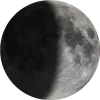 | 11:16 | 6° |
| Sunset | 16:27 | 17° |
| Civil sunset | 16:55 | 20° |
| Twilight start (−12°) | 17:25 | 23° |
| Astronomical observing session begins | 17:55 | 27° |
| Perseids radiant is always above the horizon | ||
| Moonset | 20:29 | 47° |
| Perseids radiant transit | 00:26 | 70° |
| Astronomical observing session ends | 03:51 | 51° |
| Twilight end (−12°) | 04:21 | 47° |
| Civil sunrise | 04:51 | 43° |
| Sunrise | 05:19 | 39° |
Track Perseids position throughout the night
← 17 October 2026 →
| Time | |
| Altitude | |
| Azimuth |
Moon conditions for Perseids — 2026
Meteor visibility depends strongly on the Moon’s position and brightness. This chart helps identify darker observing periods.
Blue and white show night and day; red marks when the radiant is above the horizon, the white line its transit, and grey when the Moon is above the horizon. Select a date for detailed Sun and Moon times.
Observing the Perseids
Radiant position:
- Right Ascension: 03h 01m 59s"
- Declination: 57° 30' 00s
Peak activity: Active from July 22 to August 31; with peak activity around August 10.
Associated parent body: Perseids is produced by debris associated with 109P/Swift-Tuttle. Earth encounters this stream along its orbit.
Perseids — Observation history
Previous activity records show the reported start, peak and end dates. Exact dates may shift slightly from year to year.
| Year | Start date | Peak date | End date |
|---|---|---|---|
| 1970 | - | August 12 | - |
| 2003 | - | August 12 | - |
| 2008 | August 6 | August 11 | August 14 |
| 2009 | July 21 | August 11 | September 2 |
| 2010 | July 26 | August 12 | August 20 |
| 2015 | July 17 | August 13 | August 31 |
| 2023 | July 22 | August 10 | September 2 |
Use these dates as a historical guide and check current predictions near the event.
Data Credits
Meteor data are provided by the International Astronomical Union Meteor Data Center . We thank the observers and researchers who contribute these records.