
pi-Puppids Meteor Shower: Observation Timings and Tips
pi-Puppids Visibility on May 10
pi-Puppids Rise and Set Timetable
| Time | Elevation | |
| pi-Puppids radiant rise | 12:34 | |
| pi-Puppids radiant transit | 15:14 | 8° |
| pi-Puppids radiant set | 17:54 | |
| Astrosession begin | 19:47 | -13° |
Moon Rise, 38.8% illuminated 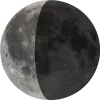 | 00:56 | -64° |
| Astrosession end | 02:20 | -78° |
| Moon Set | 12:37 | 1° |
Track pi-Puppids Position Throughout the Night
← Sun, 10 May 2026 →
| Time | |
| Altitude | |
| Azimuth |
Moon Dynamics for pi-Puppids Meteor Shower in 2026
The visibility of a meteor shower depends on the Moon's position and brightness. This chart provides a detailed view of the moon dynamics for this specific meteor shower, helping you determine the best times to observe.
The blue and white areas represent night and day, while the reddish area highlights when the radiant is above the horizon. A white line marks the radiant's transit time, and the grey area shows when the Moon is above the horizon. While many focus on the meteor shower's peak date, it is often preferable to choose a time with dark skies rather than one where the Moon's brightness interferes with visibility. Click on the chart to view detailed Sun and Moon events for a specific date in the table above, ensuring you have all the information needed for a perfect stargazing experience.
Discover the pi-Puppids Meteor Shower, including:
Radiant Position:
- Right Ascension: 07h 21m 31s"
- Declination: -45° 03' 00s
Peak Activity: This meteor shower is active from April 22 to April 24, with peak activity typically occurring around April 23, when the shower’s rate of meteors per hour is at its highest.
Associated Parent Comet: The pi-Puppids originates from debris left by 26P/Grigg-Skjellerup. The comet's debris intersects Earth's orbit, creating the meteor shower.
pi-Puppids Observation History
This section provides a record of previous meteor shower activity, including the start, end, and peak dates. While meteor showers are often associated with traditional dates, it's important to note that these dates may vary slightly each year due to solar and atmospheric conditions.
This table serves as a helpful reference, and observers should be aware that the exact dates may shift. Be sure to check updated forecasts closer to the event to determine the best time to observe the shower, as these dates can differ from year to year.
| Year | Start Date | Peak Date | End Date |
|---|---|---|---|
| 1995-mm-dd | - | April 24 | - |
Use this historical data as a guideline for when meteor showers typically occur, but remember that the exact timing may vary slightly each year.
Data Credits
We would like to express our gratitude to the International Astronomical Union (IAU) Meteor Center for providing valuable meteor data.
Special thanks to all the astronomers, researchers, and enthusiasts whose work contributes to the understanding and observation of meteor showers.