
Spindle Galaxy (NGC3115) Position and Visibility Tonight
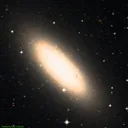
Where is NGC3115 right now?
NGC3115 tonight
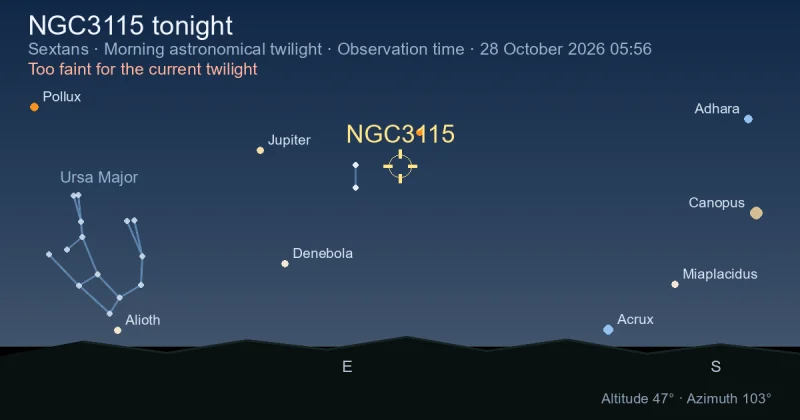
NGC3115 visibility on 2026-10-27
NGC3115 rise and set timetable
| Time | Elevation | |
| NGC3115 transit | 08:48 | 81° |
| NGC3115 set | 14:46 | |
Moonrise, 98.9% illuminated  | 19:51 | -75° |
| Astronomical observing session begins | 20:01 | -77° |
| NGC3115 rise | 02:46 | |
| Astronomical observing session ends | 05:35 | 42° |
| Twilight end (−12°) | 06:00 | 48° |
| Civil sunrise | 06:25 | 54° |
| Sunrise | 06:47 | 59° |
| Moonset | 08:26 | 80° |
Track NGC3115 position throughout the night
← 27 October 2026 →
| Time | |
| Altitude | |
| Azimuth |
NGC3115 — Image Gallery
DSS Blue
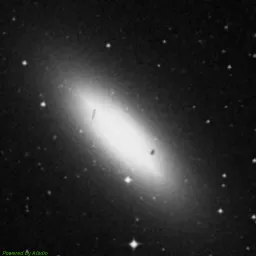
DSS Red
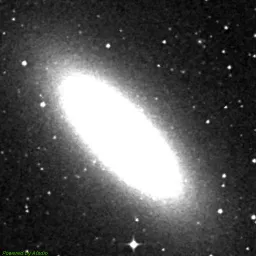
DSS Near-Infrared
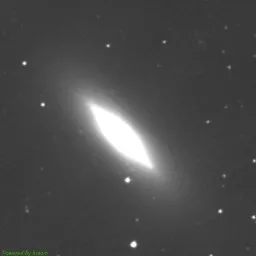
DSS Composite Image
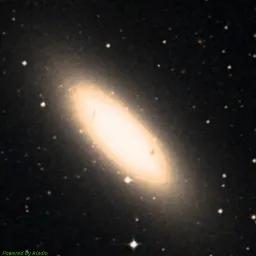
The images come from the Digitized Sky Survey 2 (DSS2), produced at the Space Telescope Science Institute (STScI) under contract with NASA, using data from UK Science and Technology Facilities Council (STFC), European Southern Observatory (ESO), National Geographic Society-Palomar Observatory Sky Survey (POSS II).
Special thanks to National Optical Astronomy Observatory (NOAO), Royal Observatory, Edinburgh, California Institute of Technology for their significant contributions.
Finder Chart for NGC3115
Spindle Galaxy (NGC3115) Passage Through Night
Current position of Spindle Galaxy (NGC3115)
| Time | 10:11 |
| Latitude | 1.35208 |
| Longitude | 103.82 |
| Elevation | 67° |
| Azimuth | 246° |
When Is Spindle Galaxy (NGC3115) Visible Throughout the Year?
| Date | Wed, 28 October 2026 |
| Astronomical observing session begins | 19:59 |
| Astronomical observing session ends | 05:32 |
| Astronomical observing duration | 10h 33m |
| Rise | 02:46 |
| Set | 14:42 |
| Elevation at transit | 81° |
| Transit time | 08:44 |
| Equatorial coordinates | RA: 10h 05m 13s", Dec: -7° 43' 06s |
| Magnitude | 9 |
| Constellation | Sextans |
You can also see when NGC3115 is visible throughout the year in a table with exact rise, transit, and set times for each date.
Astrometric and Physical Parameters of NGC3115
Coordinates and Visibility
| Right Ascension | 10h 05m 14s |
| Declination | -7° 43′ 07″ |
| Magnitude | 9.09 |
| Constellation | Sextans |
| Elevation | 67.3° |
| Azimuth | 246.1° |
Data Credits
The deep-sky information on this page comes from the OpenNGC project developed by Matteo Verga. OpenNGC provides detailed catalog data for nebulae, galaxies, clusters and other deep-sky objects.
For details or contributions, visit the official repository: OpenNGC GitHub.