Sky Tonight
ST
Location settings
Santa Clara, US
37.4°/-122°
GMT -10
Waning01:19 - 03:38
  ⌕
☾
☰
Sky-Tonight.com / Nebulae / NGC7160
  • Tonight
    • Brightest Objects
  • Solar System
    • Sun
    • Moon
    • Planets
    • Mercury
    • Venus
    • Mars
    • Jupiter
    • Saturn
    • Satellite Flyovers
    • ISS
    • Close Approaches
  • Small Bodies
    • Asteroids
    • Comets
  • Stars
    • Brightest Stars
  • Meteor Showers
    • Active Meteor Showers
    • Major Meteor Showers
  • Solar Eclipses
    • Future Solar Eclipses
    • Past Solar Eclipses
  • Lunar Eclipses
    • Future Lunar Eclipses
    • Past Lunar Eclipses
  • Deep Sky Objects
    • Spring Nebulae
    • Messier Objects
    • Nebulae
    • Star Clusters
    • Galaxies
  • Double Stars
    • Naked-Eye
    • Binocular
    • Physical
    • Color-Contrasting
    • Triple Star Systems
    • Multiple Star Systems
  • Constellations
    • Visible Tonight
    • Seasonal
    • Ecliptic
    • All 88 Constellations
  • Maps
    • Lunar map
    • Mars map
    • Mercury map
    • Earth
    • Cloud Cover Map
    • Aurora Activity
  • Contact Us
    • Feedback

Observation Settings

Or select it on the map:
This Earth map fragment is intended to illustrate celestial motion across the sky, emphasizing both bearing and elevational perspectives. The map's center point corresponds to the transit, showcasing celestial objects at their highest point, while elevation gradually decreases towards the map edges. This dynamic representation offers insights into the changing positions of celestial bodies with a focus on their bearing and elevational trajectories.
Your location: Santa Clara, United States
Timezone:
Latitude:
37.3541
Longitude:
-121.955

NGC7160 Position and Visibility Tonight
NGC7160

Where is NGC7160 right now?

NGC7160 is located in the constellation Cepheus. At the current time, it is above the horizon at an altitude of 21 degrees toward the northwest from your location, with an apparent magnitude of 6.10.
Twilight begins at 01:19 local time, and at that moment, NGC7160 will appear at an altitude of 21 degrees toward the northwest.

NGC7160 Visibility on March 04

NGC7160 is Not visible tonight

NGC7160 Rise and Set Timetable

TimeElevation
NGC7160 is always above the horizon
NGC7160 transit09:1565°
Sunset16:0228°
Civil sunset16:3025°
Moon Rise, 99.7% illuminated 16:3824°
Astrosession begin17:3019°
NGC7160 is always above the horizon
Astrosession end03:0832°
Civil sunrise04:0839°
Sunrise04:3542°
Moon Set05:1046°

Track NGC7160 Position Throughout the Night

← Wed, 4 March 2026 →

Elevation (degrees)
Time
Altitude
Azimuth
Shift the map to change the time and observe NGC7160 changing position in the night sky.

NGC7160 Image Gallery

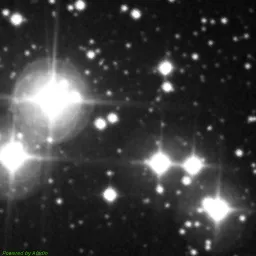
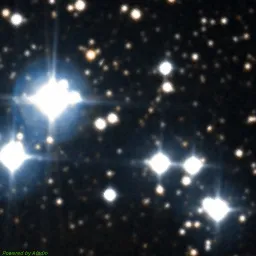
DSS Blue

NGC7160 photo taken with blue filter
These images are valuable for highlighting the presence of younger, hotter stars, which emit more light in the blue wavelengths.

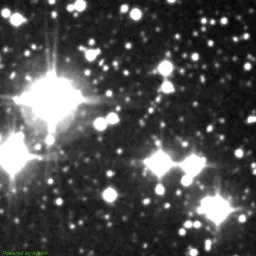
DSS Red

NGC7160 photo taken with red filter
These images are excellent for detecting older, cooler stars, as well as emission nebulae, which glow primarily in the red due to hydrogen alpha emissions.

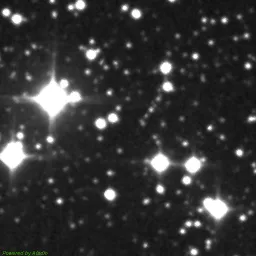
DSS Near-Infrared

NGC7160 photo taken with Near-Infrared filter
These images can penetrate dust clouds that obscure visible light, revealing structures and objects hidden within.

DSS Composite image

NGC7160 color image
DSS Color images are composite images created by combining the blue, red, and often near-infrared images to produce a full-color representation.

The photos are taken from the Digitized Sky Survey 2 (DSS2), which was produced at the Space Telescope Science Institute (STScI) under NASA contract, using data from the UK Science and Technology Facilities Council (STFC), the European Southern Observatory (ESO), and the National Geographic Society-Palomar Observatory Sky Survey (POSS II).

Special thanks to the National Optical Astronomy Observatory (NOAO), the Royal Observatory, Edinburgh, and the California Institute of Technology for their significant contributions.

Finder Chart for NGC7160

Double-click to unlock the map.
Object nameNGC7160
Field of view
Limiting magnitude
NGC7160 coordinates21.89452, 62.60331
Center coordinates21.89452, 62.60331

NGC7160 Passage Through Night

Double-click to unlock the map.

Current position of NGC7160

Time01:19
Latitude37.3541
Longitude-121.955
NGC7160 elevation21°
NGC7160 Azimuth-26°
Here you can see the current position of the NGC7160 on the map, as well as its positions for rise and set. This tool allows you to track the NGC7160's movement throughout the night, providing you with accurate and up-to-date information.

Annual motion of NGC7160


NGC7160 will be visible throughout the entire year. However, it will change its position significantly, moving 55 degrees over time. You can find the best times to observe NGC7160, when it reaches its highest elevation, in the annual motion section.
Time
DateThu, 5 March 2026
Twighlight start17:26
Twighlight end03:01
Twighlight duration10h 34m
RiseNGC7160 is always up
SetNGC7160 is always up
Elevation at transit65°
Transit time09:07
Equatorial coordinatesRA: 21h 53m 40s", Dec: 62° 36' 11s
Magnitude6
ConstellationCepheus
The graph illustrates the annual visibility pattern of a NGC7160, providing a comprehensive overview of its daily appearances and transit times throughout the year.
The graph is structured with the vertical axis showing the hours of the day, ranging from 12 AM to 12 AM the next day, while the horizontal axis spans each day of the year.
The reddish shaded area indicates the periods when the NGC7160 is above the horizon, visible to observers. The white line marks the times when the celestial object reaches its highest point in the sky each day, known as the transit.
You can also view detailed visibility information in a dedicated table, including exact rise, transit, and set times for each date.

Astrometric & Physical Parameters of NGC7160

Coordinates & Visibility

Right Ascension21.89452°
Declination62.60331°
Magnitude6.10
ConstellationCepheus
Elevation21.4°
Azimuth-25.8°

Data Credits

The nebulae information on this page is sourced from the OpenNGC project, developed by Matteo Verga. OpenNGC provides detailed data on the NGC catalog, which is a valuable resource for exploring deep-sky objects such as nebulae.

For more details or to contribute to OpenNGC, visit the official GitHub repository: OpenNGC on GitHub.