Sky Tonight
ST
Location settings
GPS 0°/0°
GMT +0
Waning18:33 - 04:53
⌕
Go to My SkyLog in
☾
☰
Sky-Tonight.com/Constellations/Lepus/Deep-sky objects in Lepus
  • 🌐 EN
    ENDEESFRPT中文
  • Tonight
    • Brightest Planets and Stars Tonight
    • Milky Way Tonight
  • Solar System
    • Sun
    • Real-Time Sun Map
    • Sunspots Activity
    • Aurora Activity
    • Moon
    • Interactive Lunar Map
    • Planets
    • Mercury
    • Venus
    • Mars
    • Jupiter
    • Saturn
    • Satellite Flyovers
    • ISS
    • Close Approaches
  • Small Bodies
    • Asteroids
    • Comets
    • Recently Updated Comets
  • Stars
    • Brightest Stars
  • Meteor Showers
    • Active Meteor Showers
    • Major Meteor Showers
  • Solar Eclipses
    • Future Solar Eclipses
    • Past Solar Eclipses
  • Lunar Eclipses
    • Future Lunar Eclipses
    • Past Lunar Eclipses
  • Deep Sky Objects
    • Seasonal Nebulae
    • Messier Objects
    • Nebulae
    • Star Clusters
    • Galaxies
  • Double Stars
    • Naked-eye
    • Binocular
    • Physical pairs
    • Color-contrasting
    • Triple systems
    • Multiple systems
  • Constellations
    • Visible Tonight
    • Seasonal
    • Ecliptic
    • All 88 Constellations
  • Maps
    • Sky Map
    • Printable Astronomy Maps & Star Charts
    • Mars Map
    • Mercury Map
    • Earth
    • Cloud Cover Map
  • Contact Us
    • Feedback

Observation Settings

Or select it on the map:
This Earth map lets you select the observer’s location used to calculate the bearing and elevation of celestial objects. The selected point determines how the sky, rise and set times, and object positions are shown.
Your location:
Timezone:
Latitude:
0
Longitude:
0

Deep-sky objects in Lepus

Sky Map

The sky above you at 18:33
This interactive sky map shows the positions of the brightest celestial objects from your location. Move it horizontally to follow how their positions change through the night.

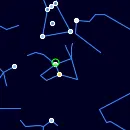
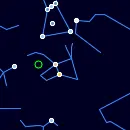
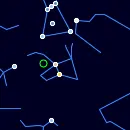
M79

Globular Cluster

M79
↗ 20:35 ↘ 04:53 ↑ 65°
☼ 8.2 ✣ 7'
Globular cluster with a dense core, contains about 150,000 stars.
More about M79

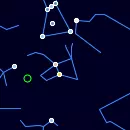
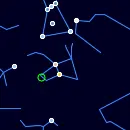
IC0418

Planetary Nebula

IC0418
↗ 20:38 ↘ 04:53 ↑ 77°
☼ 9.4 ✣ 12"
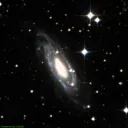
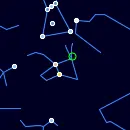
IC0418 is a planetary nebula with apparent magnitude 9.44 in the constellation Lepus, spanning approximately 0.2 arcseconds in the sky.
More about IC0418

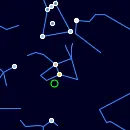
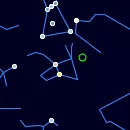
IC0422

Galaxy

IC0422
↗ 20:43 ↘ 04:53 ↑ 73°
☼ 10.7 ✣ 1'
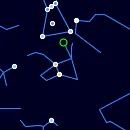
IC0422 is a galaxy with apparent magnitude 10.74 in the constellation Lepus, spanning approximately 1 arcseconds in the sky.
More about IC0422

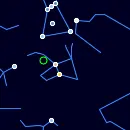
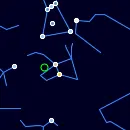
NGC1964

Galaxy

NGC1964
↗ 20:44 ↘ 04:53 ↑ 68°
☼ 10.9 ✣ 5'
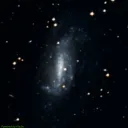
NGC1964 is a galaxy with apparent magnitude 10.91 in the constellation Lepus, spanning approximately 5.2 arcseconds in the sky.
More about NGC1964

IC0433

Galaxy

IC0433
↗ 20:51 ↘ 04:53 ↑ 78°
☼ 10.9 ✣ 1'
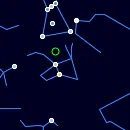
IC0433 is a galaxy with apparent magnitude 10.93 in the constellation Lepus, spanning approximately 1.4 arcseconds in the sky.
More about IC0433

NGC2196

Galaxy

NGC2196
↗ 21:23 ↘ 04:53 ↑ 68°
☼ 11.2 ✣ 3'
NGC2196 is a galaxy with apparent magnitude 11.19 in the constellation Lepus, spanning approximately 2.8 arcseconds in the sky.
More about NGC2196

NGC1744

Galaxy

NGC1744
↗ 20:11 ↘ 04:53 ↑ 64°
☼ 11.5 ✣ 5'
NGC1744 is a galaxy with apparent magnitude 11.50 in the constellation Lepus, spanning approximately 5.3 arcseconds in the sky.
More about NGC1744

NGC1832

Galaxy

NGC1832
↗ 20:23 ↘ 04:53 ↑ 74°
☼ 11.5 ✣ 2'
NGC1832 is a galaxy with apparent magnitude 11.54 in the constellation Lepus, spanning approximately 2.5 arcseconds in the sky.
More about NGC1832

NGC1784

Galaxy

NGC1784
↗ 20:16 ↘ 04:53 ↑ 78°
☼ 11.6 ✣ 4'
NGC1784 is a galaxy with apparent magnitude 11.60 in the constellation Lepus, spanning approximately 4 arcseconds in the sky.
More about NGC1784

NGC2139

Galaxy

NGC2139
↗ 21:12 ↘ 04:53 ↑ 66°
☼ 11.7 ✣ 3'
NGC2139 is a galaxy with apparent magnitude 11.66 in the constellation Lepus, spanning approximately 2.9 arcseconds in the sky.
More about NGC2139

NGC1888

Galaxy

NGC1888
↗ 20:34 ↘ 04:53 ↑ 79°
☼ 11.9 ✣ 3'
NGC1888 is a galaxy with apparent magnitude 11.92 in the constellation Lepus, spanning approximately 3.3 arcseconds in the sky.
More about NGC1888

NGC1954

Galaxy

NGC1954
↗ 20:44 ↘ 04:53 ↑ 76°
☼ 12 ✣ 4'
NGC1954 is a galaxy with apparent magnitude 12.04 in the constellation Lepus, spanning approximately 3.6 arcseconds in the sky.
More about NGC1954

IC0438

Galaxy

IC0438
↗ 21:04 ↘ 04:53 ↑ 72°
☼ 12.1 ✣ 3'
IC0438 is a galaxy with apparent magnitude 12.07 in the constellation Lepus, spanning approximately 2.8 arcseconds in the sky.
More about IC0438

NGC2179

Galaxy

NGC2179
↗ 21:19 ↘ 04:53 ↑ 68°
☼ 12.4 ✣ 2'
NGC2179 is a galaxy with apparent magnitude 12.35 in the constellation Lepus, spanning approximately 2 arcseconds in the sky.
More about NGC2179

NGC1979

Galaxy

NGC1979
↗ 20:45 ↘ 04:53 ↑ 67°
☼ 12.9 ✣ 2'
NGC1979 is a galaxy with apparent magnitude 12.90 in the constellation Lepus, spanning approximately 1.9 arcseconds in the sky.
More about NGC1979

NGC2076

Galaxy

NGC2076
↗ 20:58 ↘ 04:53 ↑ 73°
☼ 12.9 ✣ 3'
NGC2076 is a galaxy with apparent magnitude 12.93 in the constellation Lepus, spanning approximately 2.5 arcseconds in the sky.
More about NGC2076

NGC2089

Galaxy

NGC2089
↗ 20:59 ↘ 04:53 ↑ 72°
☼ 12.9 ✣ 2'
NGC2089 is a galaxy with apparent magnitude 12.94 in the constellation Lepus, spanning approximately 2.2 arcseconds in the sky.
More about NGC2089

NGC2106

Galaxy

NGC2106
↗ 21:02 ↘ 04:53 ↑ 68°
☼ 13.1 ✣ 2'
NGC2106 is a galaxy with apparent magnitude 13.13 in the constellation Lepus, spanning approximately 2.4 arcseconds in the sky.
More about NGC2106

NGC1730

Galaxy

NGC1730
↗ 20:11 ↘ 04:53 ↑ 74°
☼ 13.2 ✣ 2'
NGC1730 is a galaxy with apparent magnitude 13.22 in the constellation Lepus, spanning approximately 2.3 arcseconds in the sky.
More about NGC1730

IC2143

Galaxy

IC2143
↗ 20:58 ↘ 04:53 ↑ 71°
☼ 13.4 ✣ 2'
IC2143 is a galaxy with apparent magnitude 13.42 in the constellation Lepus, spanning approximately 1.9 arcseconds in the sky.
More about IC2143

Data Credits

The deep-sky information on this page comes from the OpenNGC project developed by Matteo Verga. OpenNGC provides detailed catalog data for nebulae, galaxies, clusters and other deep-sky objects.

For details or contributions, visit the official repository: OpenNGC GitHub.