Sky Tonight
ST
Location settings
Santa Clara, US
37.4°/-122°
GMT -9
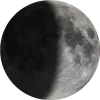
Waxing18:57 - 03:26
  ⌕
☾
☰
Sky-Tonight.com / Constellations / Corona Australis
  • 🌐 EN
    ENDEES中文
  • Tonight
    • Brightest Planets and Stars Tonight
  • Solar System
    • Sun
    • Real-Time Sun Map
    • Sunspots Activity
    • Aurora Activity
    • Moon
    • Interactive Lunar Map
    • Planets
    • Mercury
    • Venus
    • Mars
    • Jupiter
    • Saturn
    • Satellite Flyovers
    • ISS
    • Close Approaches
  • Small Bodies
    • Asteroids
    • Comets
    • Recently Updated Comets
  • Stars
    • Brightest Stars
  • Meteor Showers
    • Active Meteor Showers
    • Major Meteor Showers
  • Solar Eclipses
    • Future Solar Eclipses
    • Past Solar Eclipses
  • Lunar Eclipses
    • Future Lunar Eclipses
    • Past Lunar Eclipses
  • Deep Sky Objects
    • Seasonal Nebulae
    • Messier Objects
    • Nebulae
    • Star Clusters
    • Galaxies
  • Double Stars
    • Naked-eye
    • Binocular
    • Physical pairs
    • Color-contrasting
    • Triple systems
    • Multiple systems
  • Constellations
    • Visible Tonight
    • Seasonal
    • Ecliptic
    • All 88 Constellations
  • Maps
    • Sky Map
    • Mars Map
    • Mercury Map
    • Earth
    • Cloud Cover Map
  • Contact Us
    • Feedback

Observation Settings

Or select it on the map:
This Earth map lets you select the observer’s location used to calculate the bearing and elevation of celestial objects. The selected point determines how the sky, rise and set times, and object positions are shown.
Your location: Santa Clara, United States
Timezone:
Latitude:
37.3541
Longitude:
-121.955

Corona Australis Constellation

Double-click to unlock the map.
Corona Australis, the southern crown, is a small southern constellation resembling a curved line or crown near Sagittarius.

Corona Australis Rise and Set Timetable

TimeElevation
Moonrise, 21% illuminated 09:49-67°
Corona Australis rise16:39
Sunset17:557°
Civil sunset18:249°
Astronomical observing session begins18:5710°
Corona Australis transit19:4811°
Moonset20:2611°
Corona Australis set22:57
Astronomical observing session ends03:26-41°

Track Corona Australis Position Throughout the Night

← 18 August 2026 →

Elevation (degrees)
Time
Altitude
Azimuth
Shift the map to change the time and observe Corona Australis changing position in the night sky.

Nebulae in the constellation Corona Australis

IC4812

Nebula

IC4812
↗ 18:57 ↘ 03:26 ↑ 16°
☼ - ✣ 10.00"
IC4812 is a nebula with apparent magnitude in the constellation Corona Australis, spanning approximately 10 arcseconds in the sky.
More about IC4812

NGC6541

Globular Cluster

NGC6541
↗ 18:57 ↘ 03:26 ↑ 9°
☼ 7.3 ✣ 7.50"
NGC6541 is a globular cluster with apparent magnitude 7.32 in the constellation Corona Australis, spanning approximately 7.5 arcseconds in the sky.
More about NGC6541

NGC6726

Reflection Nebula

NGC6726
↗ 18:57 ↘ 03:26 ↑ 16°
☼ - ✣ 9.00"
NGC6726 is a reflection nebula with apparent magnitude in the constellation Corona Australis, spanning approximately 9 arcseconds in the sky.
More about NGC6726

NGC6727

Reflection Nebula

NGC6727
↗ 18:57 ↘ 03:26 ↑ 16°
☼ - ✣ 1'
NGC6727 is a reflection nebula with apparent magnitude in the constellation Corona Australis, spanning approximately 1.3 arcminute in the sky.
More about NGC6727

NGC6729

Nebula

NGC6729
↗ 18:57 ↘ 03:26 ↑ 16°
☼ - ✣ 25.00"
NGC6729 is a nebula with apparent magnitude in the constellation Corona Australis, spanning approximately 25 arcseconds in the sky.
More about NGC6729

Annual motion of Corona Australis

Time
DateTue, 18 August 2026
Twilight start19:28
Twilight end02:44
Twilight duration7h 17m
Rise16:39
Set22:57
Elevation at transit11°
Transit time19:48
Equatorial coordinatesRA: 18h 26m 58s", Dec: -41° 32' 55s
Magnitude-
Constellation
The graph illustrates the constellation’s annual visibility pattern and its daily rise, set, and transit times throughout the year.
The vertical axis shows the hours of the day, while the horizontal axis spans the days of the year.
The reddish area marks when the constellation is above the horizon. The white line shows when it reaches its highest point in the sky. View detailed visibility information in a table with rise, transit, and set times for each date.

Acknowledgements

We gratefully acknowledge the International Astronomical Union (IAU) for defining and standardizing the official constellation boundaries used in celestial mapping.

Special thanks to Sky & Telescope Magazine and contributors Roger Sinnott and Rick Fienberg for producing the charts and tables. Alan MacRobert’s constellation patterns were influenced by the work of H. A. Rey and adjusted to align with earlier traditions.