
Ursa Minor Constellation
Ursa Minor (The Little Bear)
Ursa Minor, or "The Little Bear," is a prominent constellation in the northern sky. It is best known for containing Polaris, the North Star, which has served as a celestial guide for navigators for centuries. The constellation is closely associated with Ursa Major and shares similar mythological and cultural significance.
Key Features
- Bright Stars: Ursa Minor is formed by several key stars that trace the shape of a small bear:
- Polaris: The brightest star in Ursa Minor, located nearly directly above Earth's North Pole, making it an essential navigation tool.
- Kochab: The second-brightest star, once used as a pole star over 3,000 years ago.
- Pherkad: Often paired with Kochab, these stars are sometimes called the "Guardians of the Pole."
- Asterism: The constellation contains a small dipper-shaped pattern, known as the "Little Dipper," which is less prominent than the Big Dipper in Ursa Major.
Mythological Background
In Greek mythology, Ursa Minor is often associated with Arcas, the son of Callisto. According to the myth, after Arcas was transformed into a bear to join his mother, Callisto (Ursa Major), they were placed in the sky by Zeus to protect them from harm. Together, they form the Great and Little Bears.
Other interpretations see Ursa Minor as a young bear following its parent, represented by Ursa Major. The constellation’s small size and connection to the North Star made it a symbol of guidance and protection in many cultures.
Cultural Significance
Ursa Minor is an essential constellation for navigation due to Polaris, which has historically been used by sailors, travelers, and astronomers to find true north. This made the constellation a critical tool for orienting oneself, particularly in the Northern Hemisphere.
The "Little Dipper" asterism, though less bright than the Big Dipper, remains one of the most recognizable star patterns in the sky. Ursa Minor's association with constancy and stability has cemented its place in cultural traditions and astronomical studies.
Ursa Minor Rise and Set Timetable
| Time | Elevation | |
| Ursa Minor is always above the horizon | ||
Moonrise, 25.9% illuminated 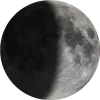 | 11:16 | 47° |
| Ursa Minor transit | 12:30 | 47° |
| Sunset | 16:27 | 42° |
| Civil sunset | 16:55 | 41° |
| Twilight start (−12°) | 17:25 | 39° |
| Moonset | 20:29 | 32° |
| Astronomical observing session begins | 21:22 | 30° |
| Ursa Minor is always above the horizon | ||
| Astronomical observing session ends | 04:21 | 32° |
| Civil sunrise | 04:51 | 33° |
| Sunrise | 05:19 | 34° |
Track Ursa Minor position throughout the night
← 17 October 2026 →
| Time | |
| Altitude | |
| Azimuth |
Annual motion of Ursa Minor
| Date | Sun, 18 October 2026 |
| Twilight start | 17:54 |
| Twilight end | 03:49 |
| Twilight duration | 10h 55m |
| Rise | Ursa Minor is always up |
| Set | Ursa Minor is always up |
| Elevation at transit | 47° |
| Transit time | 12:27 |
| Equatorial coordinates | RA: 15h 04m 48s", Dec: 80° 00' 48s |