
Meteor shower Northern Taurids — observing times and guide
Northern Taurids visibility on 2026-12-16
Northern Taurids rise and set timetable
| Time | Elevation | |
Moonrise, 28.7% illuminated 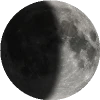 | 10:42 | -56° |
| Northern Taurids radiant rise | 18:11 | |
| Civil sunset | 18:21 | 2° |
| Twilight start (−12°) | 18:47 | 8° |
| Astronomical observing session begins | 19:13 | 14° |
| Moonset | 23:02 | 59° |
| Northern Taurids radiant transit | 00:10 | 64° |
| Astronomical observing session ends | 04:36 | 21° |
| Twilight end (−12°) | 05:03 | 15° |
| Civil sunrise | 05:29 | 9° |
| Sunrise | 05:52 | 4° |
| Northern Taurids radiant set | 06:09 |
Track Northern Taurids position throughout the night
← 16 December 2026 →
| Time | |
| Altitude | |
| Azimuth |
Moon conditions for Northern Taurids — 2026
Meteor visibility depends strongly on the Moon’s position and brightness. This chart helps identify darker observing periods.
Blue and white show night and day; red marks when the radiant is above the horizon, the white line its transit, and grey when the Moon is above the horizon. Select a date for detailed Sun and Moon times.
Observing the Northern Taurids
Radiant position:
- Right Ascension: 05h 49m 36s"
- Declination: 26° 24' 00s
Peak activity: Active from December 10 to December 22; with peak activity around December 16.
Associated parent body: Northern Taurids is produced by debris associated with 2P/Encke. Earth encounters this stream along its orbit.
Northern Taurids — Observation history
Previous activity records show the reported start, peak and end dates. Exact dates may shift slightly from year to year.
| Year | Start date | Peak date | End date |
|---|---|---|---|
| 2002 | - | November 9 | - |
| 1970 | - | October 26 | - |
| 2003 | - | October 28 | - |
| 2003 | - | November 5 | - |
| 2008 | October 20 | November 6 | November 16 |
| 2009 | October 16 | November 16 | December 9 |
| 2010 | October 30 | November 1 | November 23 |
| 2015 | September 24 | November 2 | November 2 |
| 2022 | October 13 | November 1 | November 7 |
| 2022 | November 7 | November 18 | December 9 |
| 2022 | December 10 | December 15 | December 21 |
Use these dates as a historical guide and check current predictions near the event.
Data Credits
Meteor data are provided by the International Astronomical Union Meteor Data Center . We thank the observers and researchers who contribute these records.