
Meteor shower October Draconids — observing times and guide
October Draconids visibility on 2026-10-17
October Draconids rise and set timetable
| Time | Elevation | |
| October Draconids radiant is always above the horizon | ||
Moonrise, 25.9% illuminated 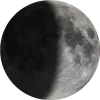 | 11:16 | 49° |
| October Draconids radiant transit | 14:55 | 72° |
| Sunset | 16:27 | 66° |
| Civil sunset | 16:55 | 63° |
| Twilight start (−12°) | 17:25 | 59° |
| Astronomical observing session begins | 17:55 | 55° |
| October Draconids radiant is always above the horizon | ||
| Moonset | 20:29 | 33° |
| Astronomical observing session ends | 03:51 | 3° |
| Twilight end (−12°) | 04:21 | 4° |
| Civil sunrise | 04:51 | 6° |
| Sunrise | 05:19 | 7° |
Track October Draconids position throughout the night
← 17 October 2026 →
| Time | |
| Altitude | |
| Azimuth |
Moon conditions for October Draconids — 2026
Meteor visibility depends strongly on the Moon’s position and brightness. This chart helps identify darker observing periods.
Blue and white show night and day; red marks when the radiant is above the horizon, the white line its transit, and grey when the Moon is above the horizon. Select a date for detailed Sun and Moon times.
October Draconids meteor shower
Draconids Meteor Shower
The Draconids are an annual meteor shower that typically peaks around . They are associated with Comet 21P/Giacobini-Zinner, which leaves a stream of debris in Earth's orbit. When Earth passes through this debris, small particles enter the atmosphere at high speed, creating the meteors that make up the shower.
Unlike many other meteor showers, the Draconids are best observed in the early evening, soon after nightfall, rather than after midnight. This is because the radiant — the point in the sky from which the meteors appear to originate — is located in the constellation Draco, near the bright star Thuban. In the early evening, the radiant is already high above the northern horizon, making it easier to spot meteors. As the night progresses, the radiant gradually descends toward the horizon, so the number of visible meteors typically decreases.
Draconid meteors are slow-moving compared to other showers, traveling at approximately 20 km/s. They often produce bright, colorful streaks and, on rare occasions, spectacular outbursts that can briefly create dozens or even hundreds of meteors per hour. Under normal conditions, however, observers can expect roughly 10–20 meteors per hour.
Observing tips
- Look toward the northern sky, near the constellation Draco.
- Early evening is generally the best time to watch, though meteors can appear anytime the sky is dark.
- Choose a dark location away from city lights for optimal viewing.
- Give your eyes time to adapt to the darkness (20–30 minutes) before observing.
The Draconids are a unique autumn shower for stargazers, appreciated for their calm, slow-moving meteors and occasional dramatic outbursts. Even in years of modest activity, they offer a peaceful opportunity to enjoy the night sky from the Northern Hemisphere.
Observing the October Draconids
Radiant position:
- Right Ascension: 17h 30m 00s"
- Declination: 55° 00' 00s
Peak activity: Active from October 4 to October 10; with peak activity around October 7.
Associated parent body: October Draconids is produced by debris associated with 21P/Giacobini-Zinner. Earth encounters this stream along its orbit.
October Draconids — Observation history
Previous activity records show the reported start, peak and end dates. Exact dates may shift slightly from year to year.
| Year | Start date | Peak date | End date |
|---|---|---|---|
| 1995 | - | October 17 | - |
| 2008 | October 7 | October 8 | October 7 |
| 2015 | October 8 | October 8 | October 9 |
| 2022 | October 4 | October 7 | October 10 |
Use these dates as a historical guide and check current predictions near the event.
Data Credits
Meteor data are provided by the International Astronomical Union Meteor Data Center . We thank the observers and researchers who contribute these records.