Sky Tonight
ST
Location settings
GPS 0°/0°
GMT +0
Waxing18:37 - 04:55
⌕
Go to My SkyLog in
☾
☰
Sky-Tonight.com/Nebulae and Deep-Sky Objects/M88
  • 🌐 EN
    ENDEESFRPT中文
  • Tonight
    • Brightest Planets and Stars Tonight
    • Milky Way Tonight
  • Solar System
    • Sun
    • Real-Time Sun Map
    • Sunspots Activity
    • Aurora Activity
    • Moon
    • Interactive Lunar Map
    • Planets
    • Mercury
    • Venus
    • Mars
    • Jupiter
    • Saturn
    • Satellite Flyovers
    • ISS
    • Close Approaches
  • Small Bodies
    • Asteroids
    • Comets
    • Recently Updated Comets
  • Stars
    • Brightest Stars
  • Meteor Showers
    • Active Meteor Showers
    • Major Meteor Showers
  • Solar Eclipses
    • Future Solar Eclipses
    • Past Solar Eclipses
  • Lunar Eclipses
    • Future Lunar Eclipses
    • Past Lunar Eclipses
  • Deep Sky Objects
    • Seasonal Nebulae
    • Messier Objects
    • Nebulae
    • Star Clusters
    • Galaxies
  • Double Stars
    • Naked-eye
    • Binocular
    • Physical pairs
    • Color-contrasting
    • Triple systems
    • Multiple systems
  • Constellations
    • Visible Tonight
    • Seasonal
    • Ecliptic
    • All 88 Constellations
  • Maps
    • Sky Map
    • Printable Astronomy Maps & Star Charts
    • Mars Map
    • Mercury Map
    • Earth
    • Cloud Cover Map
  • Contact Us
    • Feedback

Observation Settings

Or select it on the map:
This Earth map lets you select the observer’s location used to calculate the bearing and elevation of celestial objects. The selected point determines how the sky, rise and set times, and object positions are shown.
Your location:
Timezone:
Latitude:
0
Longitude:
0

M88 Position and Visibility Tonight
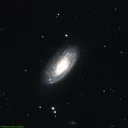
M88

Where is M88 right now?

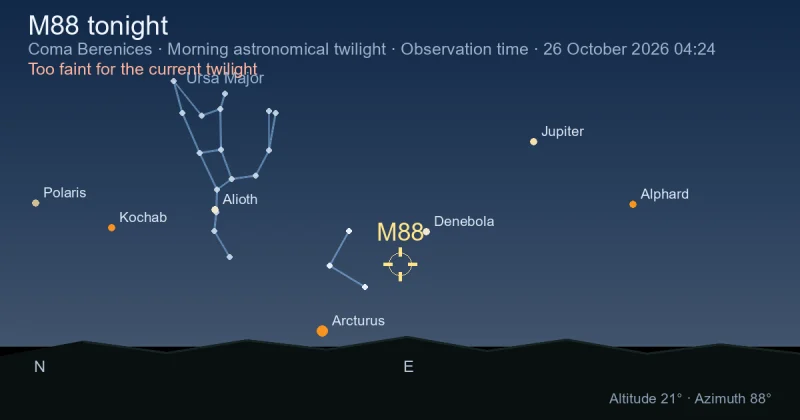
M88 is located in the constellation Coma Berenices. It is currently below the horizon and is not visible from your location.
Open the interactive guide to M88’s position and path tonight

M88 tonight

M88 tonight

M88 visibility on 2026-11-23

M88 Visible from early morning until sunrise

M88 rise and set timetable

TimeElevation
M88 transit08:2276°
M88 set14:21
Moonrise, 96.1% illuminated 16:47-35°
Astronomical observing session begins19:03-66°
M88 rise02:19
Astronomical observing session ends04:2931°
Twilight end (−12°)04:5538°
Moonset05:1843°
Civil sunrise05:2044°
Sunrise05:4449°

Track M88 position throughout the night

← 23 November 2026 →

Elevation (degrees)
Time
Altitude
Azimuth
Shift the map to change the time and observe M88 changing position in the night sky.

M88 - Spiral Galaxy

M88 is a spiral galaxy located in the constellation Coma Berenices. It was discovered by Charles Messier in 1781. M88 is part of the Virgo Cluster of galaxies and is known for its well-defined spiral arms.

M88 spans about 130,000 light-years across and contains a massive population of stars, gas, and dust. The galaxy is approximately 47 million light-years away from Earth and has an apparent magnitude of 9.6, making it visible with a small telescope.

M88 — Image Gallery

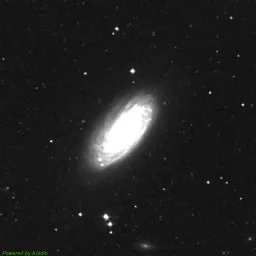
DSS Blue
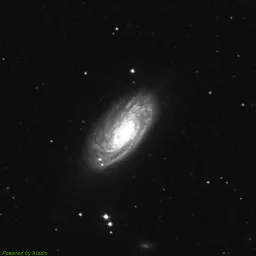
M88 — blue-filter image
Blue images highlight younger, hotter stars that emit strongly at blue wavelengths.

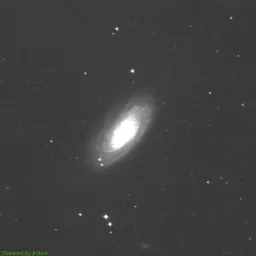
DSS Red

M88 — red-filter image
Red images reveal older, cooler stars and emission nebulae glowing strongly in hydrogen-alpha light.

DSS Near-Infrared

M88 — near-infrared image
Near-infrared images penetrate dust that obscures visible light and reveal hidden structures.

DSS Composite Image

M88 — composite color image
DSS color images combine blue, red and often near-infrared exposures into a composite view.

The images come from the Digitized Sky Survey 2 (DSS2), produced at the Space Telescope Science Institute (STScI) under contract with NASA, using data from UK Science and Technology Facilities Council (STFC), European Southern Observatory (ESO), National Geographic Society-Palomar Observatory Sky Survey (POSS II).

Special thanks to National Optical Astronomy Observatory (NOAO), Royal Observatory, Edinburgh, California Institute of Technology for their significant contributions.

Finder Chart for M88

Field of view 5.0°

Loading finder chart…
Loading interactive map…

Open the step-by-step guide View on Sky Map

M88 Passage Through Night

Double-click to unlock the map.

Current position of M88

Time16:27
Latitude0
Longitude0
Elevation-30°
Azimuth287°
Here you can see the current position of M88 on the map, as well as its positions for rise and set. This tool lets you track its movement throughout the night with accurate, up-to-date information.

When Is M88 Visible Throughout the Year?

M88 will remain visible until August 16, when it moves too close to the Sun and temporarily disappears from the night sky. Time
DateTue, 24 November 2026
Astronomical observing session begins19:00
Astronomical observing session ends04:24
Astronomical observing duration9h 24m
Rise02:19
Set14:17
Elevation at transit76°
Transit time08:18
Equatorial coordinatesRA: 12h 31m 59s", Dec: 14° 25' 13s
Magnitude10
ConstellationComa Berenices
The graph illustrates the annual visibility pattern of M88, including its daily appearances and transit times. The vertical axis shows the hours of the day and the horizontal axis spans the year. The reddish area marks when the object is above the horizon, while the white line marks its daily transit.
You can also see when M88 is visible throughout the year in a table with exact rise, transit, and set times for each date.

Astrometric and Physical Parameters of M88

Coordinates and Visibility

Right Ascension12h 31m 59s
Declination14° 25′ 13″
Magnitude10.33
ConstellationComa Berenices
Elevation-30.4°
Azimuth286.8°

More about M88

  • Where is M88 right now?
  • How to find M88

Data Credits

The deep-sky information on this page comes from the OpenNGC project developed by Matteo Verga. OpenNGC provides detailed catalog data for nebulae, galaxies, clusters and other deep-sky objects.

For details or contributions, visit the official repository: OpenNGC GitHub.