
NGC1817 Position and Visibility Tonight
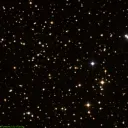
Where is NGC1817 right now?
NGC1817 visibility on 2026-09-07
NGC1817 rise and set timetable
| Time | Elevation | |
| Moonset | 14:56 | -27° |
| Astronomical observing session begins | 18:58 | -31° |
| NGC1817 rise | 22:21 | |
Moonrise, 21% illuminated  | 23:21 | 11° |
| Astronomical observing session ends | 03:13 | 56° |
| Twilight end | 03:45 | 62° |
| Civil sunrise | 04:17 | 66° |
| Sunrise | 04:44 | 68° |
| NGC1817 transit | 05:13 | 69° |
Track NGC1817 Position Throughout the Night
← 7 September 2026 →
| Time | |
| Altitude | |
| Azimuth |
NGC1817 — Image Gallery
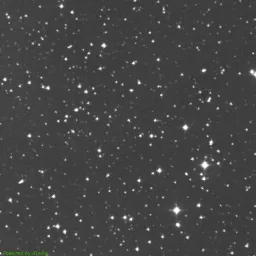
DSS Blue
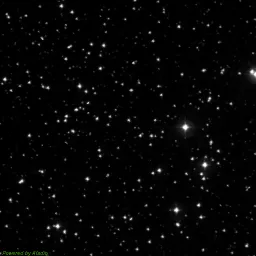
DSS Red
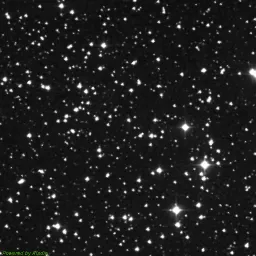
DSS Near-Infrared
DSS Composite Image
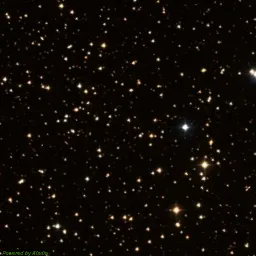
The images come from the Digitized Sky Survey 2 (DSS2), produced at the Space Telescope Science Institute (STScI) under contract with NASA, using data from UK Science and Technology Facilities Council (STFC), European Southern Observatory (ESO), National Geographic Society-Palomar Observatory Sky Survey (POSS II).
Special thanks to National Optical Astronomy Observatory (NOAO), Royal Observatory, Edinburgh, California Institute of Technology for their significant contributions.
Finder Chart for NGC1817
| Object name | NGC1817 |
| Field of view | |
| Limiting magnitude | |
| NGC1817 coordinates | 5.2073, 16.68408 |
| Center coordinates | 5.2073, 16.68408 |
NGC1817 Passage Through Night
Current position of NGC1817
| Time | 13:29 |
| Latitude | 37.3541 |
| Longitude | -121.955 |
| Elevation | -14° |
| Azimuth | 304° |
When Is NGC1817 Visible Throughout the Year?
NGC1817 will remain visible until April 21, when it moves too close to the Sun and temporarily disappears from the night sky.
| Date | Mon, 7 September 2026 |
| Twilight start | 18:54 |
| Twilight end | 03:07 |
| Twilight duration | 8h 13m |
| Rise | 22:21 |
| Set | 12:05 |
| Elevation at transit | 69° |
| Transit time | 05:13 |
| Equatorial coordinates | RA: 05h 12m 26s", Dec: 16° 41' 02s |
| Magnitude | 8 |
| Constellation | Taurus |
You can also see when NGC1817 is visible throughout the year in a table with exact rise, transit, and set times for each date.
Astrometric and Physical Parameters of NGC1817
Coordinates and Visibility
| Right Ascension | 05h 12m 26s |
| Declination | 16° 41′ 03″ |
| Magnitude | 7.70 |
| Constellation | Taurus |
| Elevation | -14.1° |
| Azimuth | 304.3° |
Data Credits
The deep-sky information on this page comes from the OpenNGC project developed by Matteo Verga. OpenNGC provides detailed catalog data for nebulae, galaxies, clusters and other deep-sky objects.
For details or contributions, visit the official repository: OpenNGC GitHub.