
Aristarchus on the Moon Map
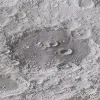
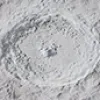
Aristarchus
| Feature type | Crater |
| Size (km) | 40 |
| Coordinates (latitude, longitude) | 23.7, -47.5 |
Aristarchus - Lunar Crater
Aristarchus is a prominent impact crater located in the northwest part of the Moon's near side, in the Aristarchus Plateau. It is known for its brightness and detailed structure.
The crater has a diameter of approximately 40 kilometers and a depth of about 3 kilometers. Its central peak rises to a height of approximately 0.5 kilometers.
Aristarchus is estimated to be around 450 million years old and is one of the brightest features on the lunar surface.
Moon Surface Features Facing Earth

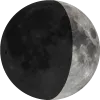
Dark basaltic plain where Apollo 11 landed in 1969, known as the 'Sea of Tranquility'.
A dark plain called the 'Sea of Fertility,' visible from Earth with a telescope or binoculars.
Mare Serenitatis
Sea
Round, dark plain adjacent to Mare Tranquillitatis, formed by ancient volcanic activity.
Luna 2 landing site
Landing Site
Soviet spacecraft, first human-made object to impact the Moon in 1959.
Apollo 11 landing site
Landing Site
First crewed Moon landing in 1969; Neil Armstrong and Buzz Aldrin walked on Mare Tranquillitatis.

Apollo 14 landing site
Landing Site

1971 mission landing near Fra Mauro, a hilly region from Imbrium impact.
Apollo 15 landing site
Landing Site
1971 mission to Hadley Rille near Apennine Mountains; first use of lunar rover.
We acknowledge the resources provided by
Solar System Scope
for high-resolution planetary textures, and the
Gazetteer of Planetary Nomenclature
for official planetary naming data. We remain responsible for any errors in their use.