Crater Constellation
Double-click to unlock the map.
Crater, the cup, is a small constellation in the southern sky, representing a cup in Greek mythology, often associated with the god Apollo.
Crater Rise and Set Timetable
| Time | Elevation | |
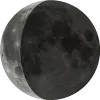
Moonrise, 98.6% illuminated ![]() | 17:09 | 2° |
| Astronomical observing session begins | 01:00 | -63° |
| Astronomical observing session ends | 03:35 | -37° |
| Moonset | 04:01 | -32° |
| Crater rise | 06:44 | |
| Crater transit | 11:59 | 39° |
Track Crater Position Throughout the Night
← 27 August 2026 →
| Time | |
| Altitude | |
| Azimuth |
Shift the map to change the time and observe Crater changing position in the night sky.
Nebulae in the constellation Crater
NGC3537 NED02
Galaxy
NGC3537 NED02 is a galaxy with apparent magnitude in the constellation Crater, spanning approximately 1.4 arcseconds in the sky.
NGC3836 NED01
Galaxy
NGC3836 NED01 is a galaxy with apparent magnitude in the constellation Crater, spanning approximately 0.4 arcseconds in the sky.
Annual motion of Crater
| Date | Fri, 28 August 2026 |
| Twilight start | 19:11 |
| Twilight end | 02:56 |
| Twilight duration | 8h 45m |
| Rise | 06:40 |
| Set | 17:10 |
| Elevation at transit | 39° |
| Transit time | 11:55 |
| Equatorial coordinates | RA: 11h 16m 21s", Dec: -14° 04' 42s |
| Magnitude | - |
| Constellation |
The graph illustrates the constellation’s annual visibility pattern and its daily rise, set, and transit times throughout the year.
The vertical axis shows the hours of the day, while the horizontal axis spans the days of the year.
The reddish area marks when the constellation is above the horizon. The white line shows when it reaches its highest point in the sky. View detailed visibility information in a table with rise, transit, and set times for each date.
The vertical axis shows the hours of the day, while the horizontal axis spans the days of the year.
The reddish area marks when the constellation is above the horizon. The white line shows when it reaches its highest point in the sky. View detailed visibility information in a table with rise, transit, and set times for each date.
Acknowledgements
We gratefully acknowledge the International Astronomical Union (IAU) for defining and standardizing the official constellation boundaries used in celestial mapping.
Special thanks to Sky & Telescope Magazine and contributors Roger Sinnott and Rick Fienberg for producing the charts and tables. Alan MacRobert’s constellation patterns were influenced by the work of H. A. Rey and adjusted to align with earlier traditions.