Sky Tonight
ST
Location settings
Santa Clara, US
37.4°/-122°
GMT -9
Waning00:27 - 02:55
  ⌕
☾
☰
Sky-Tonight.com / Constellations / Fornax
  • Tonight
    • Brightest Planets and Stars Tonight
  • Solar System
    • Sun
    • Real-Time Sun Map
    • Sunspots Activity
    • Aurora Activity
    • Moon
    • Interactive Lunar map
    • Planets
    • Mercury
    • Venus
    • Mars
    • Jupiter
    • Saturn
    • Satellite Flyovers
    • ISS
    • Close Approaches
  • Small Bodies
    • Asteroids
    • Comets
    • Recently Updated Comets
  • Stars
    • Brightest Stars
  • Meteor Showers
    • Active Meteor Showers
    • Major Meteor Showers
  • Solar Eclipses
    • Future Solar Eclipses
    • Past Solar Eclipses
  • Lunar Eclipses
    • Future Lunar Eclipses
    • Past Lunar Eclipses
  • Deep Sky Objects
    • Summer Nebulae
    • Messier Objects
    • Nebulae
    • Star Clusters
    • Galaxies
  • Double Stars
    • Naked-Eye
    • Binocular
    • Physical
    • Color-Contrasting
    • Triple Star Systems
    • Multiple Star Systems
  • Constellations
    • Visible Tonight
    • Seasonal
    • Ecliptic
    • All 88 Constellations
  • Maps
    • Mars map
    • Mercury map
    • Earth
    • Cloud Cover Map
  • Contact Us
    • Feedback

Observation Settings

Or select it on the map:
This Earth map fragment is intended to illustrate celestial motion across the sky, emphasizing both bearing and elevational perspectives. The map's center point corresponds to the transit, showcasing celestial objects at their highest point, while elevation gradually decreases towards the map edges. This dynamic representation offers insights into the changing positions of celestial bodies with a focus on their bearing and elevational trajectories.
Your location: Santa Clara, United States
Timezone:
Latitude:
37.3541
Longitude:
-121.955

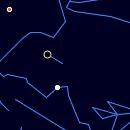
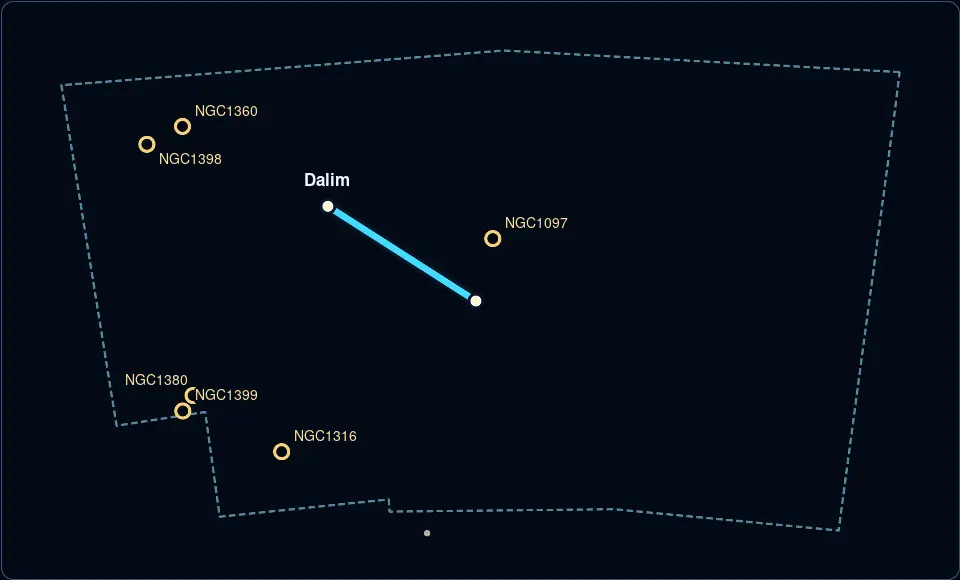
Fornax Constellation
Double-click to unlock the map.
Fornax, the furnace, is a faint southern constellation introduced by Nicolas-Louis de Lacaille to honor the laboratory furnace.

Fornax Rise and Set Timetable

TimeElevation
Moon Rise, 16.9% illuminated 08:5410°
Moon Set21:09-52°
Astrosession begin00:27-15°
Fornax Rise02:02
Astrosession end02:557°
Civil sunrise03:3211°
Sunrise04:0314°
Fornax Transit06:0220°
Fornax Set10:03

Track Fornax Position Throughout the Night

← Sun, 19 July 2026 →

Elevation (degrees)
Time
Altitude
Azimuth
Shift the map to change the time and observe Fornax changing position in the night sky.

Nebulae in the constellation Fornax

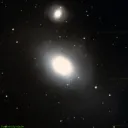
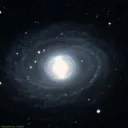
NGC1097

Galaxy

NGC1097
↗ 01:50 ↘ 10:17 ↑ 9°
☼ 9.8 ✣ 10.57"
NGC1097 is a galaxy with apparent magnitude 9.76 in the constellation Fornax, spanning approximately 10.6 arcseconds in the sky.
More about NGC1097

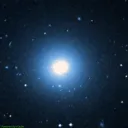
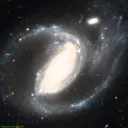
Fornax A (NGC1316)

Galaxy

Fornax A (NGC1316)
↗ 03:02 ↘ 10:18 ↑ -1°
☼ 8.5 ✣ 13.46"
NGC1316 is a galaxy with apparent magnitude 8.48 in the constellation Fornax, spanning approximately 13.5 arcseconds in the sky.
More about Fornax A (NGC1316)

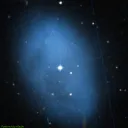
NGC1360

Planetary Nebula

NGC1360
↗ 02:18 ↘ 11:23 ↑ 6°
☼ 9.4 ✣ 6.42"
NGC1360 is a planetary nebula with apparent magnitude 9.40 in the constellation Fornax, spanning approximately 6.4 arcseconds in the sky.
More about NGC1360

NGC1380

Galaxy

NGC1380
↗ 03:04 ↘ 10:44 ↑ -1°
☼ 9.9 ✣ 4.58"
NGC1380 is a galaxy with apparent magnitude 9.94 in the constellation Fornax, spanning approximately 4.6 arcseconds in the sky.
More about NGC1380

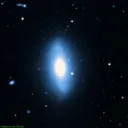
NGC1398

Galaxy

NGC1398
↗ 02:26 ↘ 11:27 ↑ 5°
☼ 9.6 ✣ 6.95"
NGC1398 is a galaxy with apparent magnitude 9.55 in the constellation Fornax, spanning approximately 7 arcseconds in the sky.
More about NGC1398

NGC1399

Galaxy

NGC1399
↗ 03:08 ↘ 10:44 ↑ -2°
☼ 9.4 ✣ 8.51"
NGC1399 is a galaxy with apparent magnitude 9.40 in the constellation Fornax, spanning approximately 8.5 arcseconds in the sky.
More about NGC1399

Annual motion of Fornax

Time
DateMon, 20 July 2026
Twighlight start20:08
Twighlight end02:09
Twighlight duration6h 1m
Rise01:58
Set09:59
Elevation at transit20°
Transit time05:59
Equatorial coordinatesRA: 02h 44m 49s", Dec: -32° 56' 46s
Magnitude-
Constellation
The graph illustrates the annual visibility pattern of a Fornax, providing a comprehensive overview of its daily appearances and transit times throughout the year.
The graph is structured with the vertical axis showing the hours of the day, ranging from 12 AM to 12 AM the next day, while the horizontal axis spans each day of the year.
The reddish shaded area indicates the periods when the Fornax is above the horizon, visible to observers. The white line marks the times when the celestial object reaches its highest point in the sky each day, known as the transit. You can also view detailed visibility information in a dedicated table, including exact rise, transit, and set times for each date.

Acknowledgements

We gratefully acknowledge the International Astronomical Union (IAU) for defining and standardizing the official constellation boundaries, which provide a consistent framework for celestial mapping.

Special thanks to Sky & Telescope Magazine and contributors Roger Sinnott and Rick Fienberg for their collaboration in producing the charts and tables. The constellation patterns, drawn by Alan MacRobert, were influenced by the work of H. A. Rey and thoughtfully adjusted to align with earlier traditions.