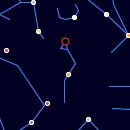
Serpens Constellation
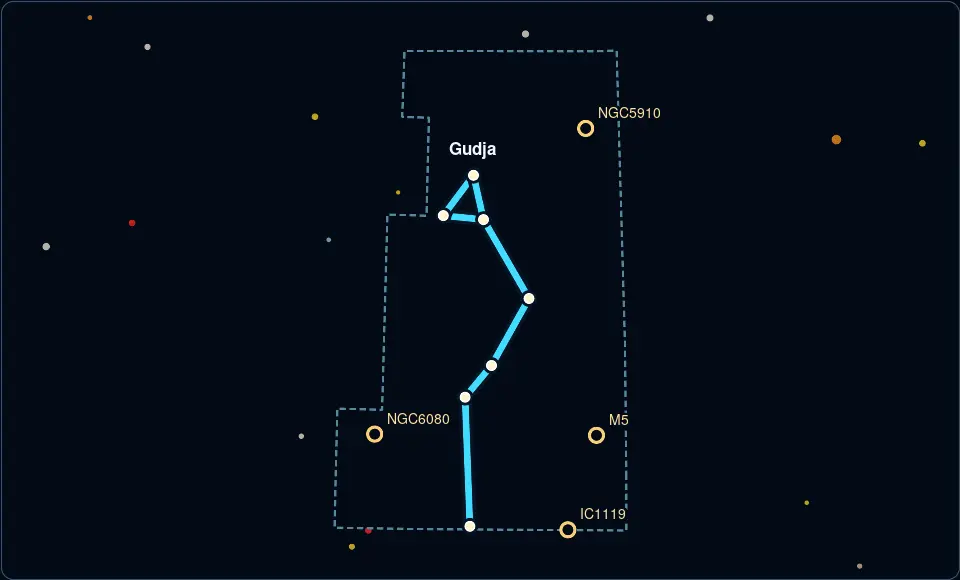
Serpens, the serpent, is a constellation split into two parts, Serpens Caput (the head) and Serpens Cauda (the tail), representing a serpent held by the healer Ophiuchus.
Where is Serpens right now?
It is currently below the horizon and is not visible from your location.
Serpens Rise and Set Timetable
| Time | Elevation | |
| Sunset | 18:49 | 25° |
| Civil sunset | 19:11 | 20° |
| Twilight start (−12°) | 19:36 | 13° |
Moonrise, 98.9% illuminated  | 19:51 | 10° |
| Astronomical observing session begins | 03:20 | -73° |
| Astronomical observing session ends | 06:00 | -36° |
| Moonset | 08:26 | -0° |
| Serpens rise | 08:27 | |
| Serpens transit | 14:27 | 82° |
Track Serpens position throughout the night
← 27 October 2026 →
| Time | |
| Altitude | |
| Azimuth |
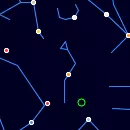
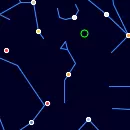
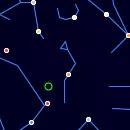
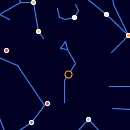
Shift the map to change the time and observe Serpens changing position in the night sky.
Annual motion of Serpens
| Date | Wed, 28 October 2026 |
| Twilight start | 19:55 |
| Twilight end | 05:28 |
| Twilight duration | 10h 33m |
| Rise | 08:23 |
| Set | 20:23 |
| Elevation at transit | 82° |
| Transit time | 14:23 |
| Equatorial coordinates | RA: 15h 48m 49s", Dec: 09° 41' 35s |
Deep-sky objects in Serpens
M5
Globular Cluster
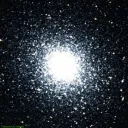
A large globular cluster containing several hundred thousand stars, located in the constellation Serpens.