
When Is the Next Solar Eclipse?
The next Solar eclipse will occur on 6 February 2027.
The next Solar eclipse on Earth is not always the next one visible from where you are. Eclipse visibility depends on your location, so the dates below answer both questions: when the next eclipse occurs anywhere in the world, and when you can see one from your selected location.
The Next Solar Eclipse
The next eclipse worldwide is a Annular Solar eclipse on 6 February 2027. During an annular solar eclipse, the Moon passes in front of the Sun but appears too small to cover it completely, leaving a bright ring around the Moon. The card below shows the event timing, phases, visibility area and other details.
Worldwide, the eclipse begins at 6 February 2027, 03:59 (GMT-9), reaches its greatest phase at 6 February 2027, 07:01 (GMT-9), and ends at 6 February 2027, 10:02 (GMT-9). At maximum, up to 86% of the Sun’s disk is covered. These are global circumstances: the times and coverage at your location can differ.
6 February 2027
Annular Solar Eclipse
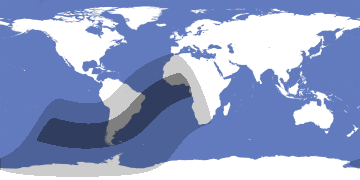
| Global | From your location | |
|---|---|---|
| Penumbra | 03:59-10:02 | Not visible |
| Antumbra | 05:05-08:57 | Not visible |
The Next Solar Eclipse Visible From Your Location
The next Solar eclipse visible from your selected location is a Partial Solar eclipse on 14 January 2029. During a partial solar eclipse, the Moon covers part of the Sun, so the Sun appears as a bright crescent or partially obscured disk. The card below shows exactly which phases are visible from your coordinates and their local times.
Worldwide, the eclipse begins at 14 January 2029, 06:04 (GMT-9), reaches its greatest phase at 14 January 2029, 08:14 (GMT-9), and ends at 14 January 2029, 10:24 (GMT-9). At maximum, up to 82% of the Sun’s disk is covered. These are global circumstances: the times and coverage at your location can differ.
From latitude 37.354° and longitude -121.955°, the eclipse begins at 14 January 2029, 06:24 (GMT-9), reaches maximum at 14 January 2029, 07:24 (GMT-9), and ends at 14 January 2029, 08:43 (GMT-9). Maximum solar coverage is 56%.
14 January 2029
Partial Solar Eclipse
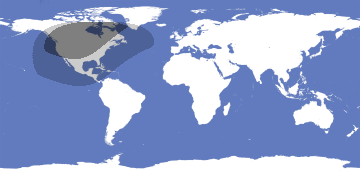
| Global | From your location | |
|---|---|---|
| Penumbra | 06:04-10:24 | 06:25-08:46 |
| Umbra | - | Not visible |