Sky TonightST
Location settings
GPS 0°/0° GMT +0
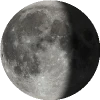
Waning Gibbous · 64%
19:2304:56
Go to My SkyLog in
☾
☰
  • 🌐 EN
    ENDEESFRPT中文
  • Tonight
  • Brightest Planets and Stars Tonight
  • Milky Way Tonight
  • Solar System
    • Sun
      • Real-Time Sun Map
      • Sunspots Activity
      • Aurora Activity
    • Moon
      • Interactive Lunar Map
    • Planets
      • Mercury
      • Venus
      • Mars
      • Jupiter
      • Saturn
    • Small Bodies
      • Asteroids
      • Near-Earth Asteroids
      • Comets
      • Recently Updated Comets
  • Deep Sky
    • Messier Objects
    • Deep Sky Objects
      • Seasonal Nebulae
      • Nebulae
      • Star Clusters
      • Galaxies
    • Constellations
      • Visible Tonight
      • Seasonal
      • Ecliptic
      • All 88 Constellations
    • Stars
      • Brightest Stars
    • Double Stars
      • Naked-eye
      • Binocular
      • Physical pairs
      • Color-contrasting
      • Triple systems
      • Multiple systems
  • Sky Events
    • Meteor Showers
      • Active Meteor Showers
      • Major Meteor Showers
    • Satellite Flyovers
      • ISS
    • Close Approaches
    • Solar Eclipses
      • Future Solar Eclipses
      • Past Solar Eclipses
    • Lunar Eclipses
      • Future Lunar Eclipses
      • Past Lunar Eclipses
    • Maps
      • Sky Map
      • Printable Astronomy Maps & Star Charts
      • Mars Map
      • Mercury Map
      • Earth
      • Cloud Cover Map
  • Feedback
Sky-Tonight.comAsteroidsNear-Earth Asteroids

◎ Location Settings

Select your observing location. It is used to calculate object positions, rise and set times, and the appearance of the sky.

📍
© OpenStreetMap contributors

Or select it on the map:

Your location

Latitude
0°
Longitude
0°

Near-Earth Asteroids

All asteroidsNear-Earth Asteroids

Browse asteroids whose orbits bring them into the inner Solar System. The nearest objects are listed first.

Near-Earth asteroids have a perihelion distance below 1.3 AU. This orbital classification does not imply an impact risk. NASA/JPL.

This list currently includes only the near-Earth asteroids in the brightness-selected catalog.

Positions calculated for 29 November 2026 19:23

NEOs in database
—

Asteroids · NASA JPL

Visible tonight
—

Magnitude ≤ 15 · Altitude > 30°

Near-Earth Asteroids

(66146) 1998 TU3

asteroid
(66146) 1998 TU3
✧
Magnitude
15.8
↑
Maximum elevation
56°
↔
Distance from Earth
0.6119 AU
⇅
Rise time – Set time
11:36 – 23:34
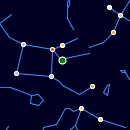
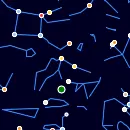
Aten asteroid with an approximate diameter of 2.8 km. 1998 TU3 orbits the Sun in about 0.7 years and is currently in Aquarius. NEO
More about (66146) 1998 TU3→

(3200) Phaethon

asteroid
(3200) Phaethon
✧
Magnitude
17.1
↑
Maximum elevation
61°
↔
Distance from Earth
1.1074 AU
⇅
Rise time – Set time
12:11 – 00:09
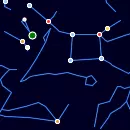
Apollo asteroid with an approximate diameter of 6.2 km. Phaethon orbits the Sun in about 1.4 years and is currently in Pegasus. NEO
More about (3200) Phaethon→

(433) Eros

asteroid
(433) Eros
✧
Magnitude
14.2
↑
Maximum elevation
6°
↔
Distance from Earth
2.58 AU
⇅
Rise time – Set time
07:49 – 19:47
Amor asteroid with an approximate diameter of 16.8 km. Eros orbits the Sun in about 1.8 years and is currently in Sagittarius. NEO
More about (433) Eros→
Page 1 of 1

Distances and magnitudes are estimates from the catalog orbital elements for the displayed time, not the minimum distance of a close approach. Objects are included regardless of brightness or whether they are above your horizon.