
How Moon’s apparent size changes
The Moon’s apparent size changes as its distance from Earth changes. Compare the smallest, selected and largest disks over the next year. The phase also changes, but a full Moon is called a supermoon only when it occurs near perigee; the largest disk here may have another phase.
The comparison covers the next 12 months. Annual minimum and maximum are estimated from daily ephemerides.
Drag the Moon around Earth to choose a date and compare its size and phase.
- Angular diameter
- 29.66′
- Distance to Earth
- 402418 km
- Illuminated
- 36%
Dashed outline: selected Moon size
Supermoons and micromoons in the next year
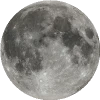
These lists show the three largest and three smallest full Moons in the selected 12 months. “Supermoon” and “micromoon” have no universal distance cutoff; the labels here describe the nearest and farthest full Moons in this period. The annual absolute size extremes above may fall on other phases.
MaximumMinimum
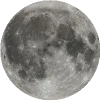
The largest full Moon is on 24 December 2026 · 01:53: 33.49′ across, about 356043 km from Earth.
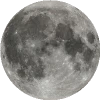
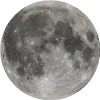
Largest full Moons
Smallest full Moons
Moon distance and size over time
Samples about every two weeks, plus each monthly size maximum, the annual extremes and exact full Moons. Maximum dates and sizes are bold; distances are approximate.
MaximumMinimum
| Date | Angular diameter | Distance to Earth | Illuminated | Moon phase |
|---|---|---|---|---|
| 29.66′ | 402418 km | 36% |  Waxing Crescent | |
| 33.11′ | 360531 km | 99.8% |  Full Moon | |
| 33.24′ | 359035 km | 97.5% |  Waning Gibbous | |
| 32.9′ | 363523 km | 83.9% |  Waning Gibbous | |
| 29.39′ | 406906 km | 3.5% |  Waxing Crescent | |
| 33.48′ | 356043 km | 99.9% |  Full Moon | |
| 33.49′ | 356043 km | 99.9% |  Full Moon | |
| Largest Moon size of the year | 33.49′ | 356043 km | 99.8% |  Full Moon |
| 29.52′ | 405410 km | 7.3% |  Waning Crescent | |
| 32.74′ | 365019 km | 82.5% |  Waxing Gibbous | |
| 33.43′ | 357539 km | 99.6% |  Full Moon | |
| 33.4′ | 357539 km | 100% |  Full Moon | |
| 29.49′ | 405410 km | 18.4% |  Waning Crescent | |
| 32.41′ | 368011 km | 68.6% |  Waxing Gibbous | |
| 33.08′ | 360531 km | 94.4% |  Waxing Gibbous | |
| 32.88′ | 363523 km | 100% |  Full Moon | |
| 29.55′ | 403914 km | 33.4% |  Waning Crescent | |
| 32.22′ | 371003 km | 53.7% |  First Quarter | |
| 32.6′ | 366515 km | 84.8% |  Waxing Gibbous | |
| 32.07′ | 372499 km | 99.9% |  Full Moon | |
| 29.6′ | 403914 km | 50.5% |  Last Quarter | |
| 32.26′ | 371003 km | 39.3% |  Waxing Crescent | |
| 32.28′ | 369507 km | 50.6% |  First Quarter | |
| 31.16′ | 382971 km | 99.8% |  Full Moon | |
| 29.6′ | 403914 km | 67.2% |  Waning Gibbous | |
| 32.58′ | 366515 km | 16.3% |  Waxing Crescent | |
| 32.52′ | 368011 km | 25.8% |  Waxing Crescent | |
| 30.32′ | 393442 km | 99.8% |  Full Moon | |
| 29.53′ | 403914 km | 81.6% |  Waning Gibbous | |
| 33.01′ | 362027 km | 6.9% |  Waxing Crescent | |
| 32.9′ | 363523 km | 14.1% |  Waxing Crescent | |
| 29.72′ | 402418 km | 99.9% |  Full Moon | |
| 29.45′ | 405410 km | 92.2% |  Waning Gibbous | |
| 33.34′ | 359035 km | 1.2% |  New Moon | |
| 33.23′ | 359035 km | 5.3% |  Waxing Crescent | |
| 29.42′ | 405410 km | 100% |  Full Moon | |
| 29.41′ | 405410 km | 98.4% |  Full Moon | |
| 33.42′ | 357539 km | 0.3% |  New Moon | |
| 33.38′ | 357539 km | 0.5% |  New Moon | |
| 29.47′ | 405410 km | 99.9% |  Full Moon | |
| 29.49′ | 405410 km | 100% |  Full Moon | |
| 33.25′ | 359035 km | 0.8% |  New Moon | |
| 29.6′ | 403914 km | 96.4% |  Waxing Gibbous | |
| 29.91′ | 399426 km | 99.9% |  Full Moon | |
| 32.87′ | 363523 km | 6.3% |  Waning Crescent | |
| 29.75′ | 400922 km | 87.8% |  Waxing Gibbous | |
| 30.63′ | 390450 km | 99.8% |  Full Moon | |
| 32.41′ | 368011 km | 25.2% |  Waning Crescent | |
| 32.39′ | 369507 km | 15.9% |  Waning Crescent | |
| 29.85′ | 400922 km | 74.3% |  Waxing Gibbous | |
| 31.54′ | 378483 km | 99.8% |  Full Moon |