
Sky Tonight
Whether you use your eyes, binoculars or a telescope, the night sky offers endless discoveries. Happy stargazing!Sky Map
Celestial bearing and elevation at 17:28
This interactive sky map shows what is visible now from your location, including the Moon, planets, bright stars, meteor activity and satellite flyovers. Move the map horizontally to follow the sky through the night.
What’s Visible in the Sky Tonight — October 14–October 15
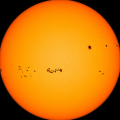
Sun
From your location, the Sun sets at 16:30 and nautical twilight ends at 17:28. The sky remains dark enough for stargazing until morning twilight begins at 04:19.Moon
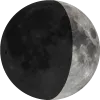
The Moon is in the Waxing Crescent phase and is about 17% illuminated. It rises at 09:30 and sets at 18:45.Planets
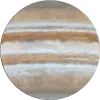
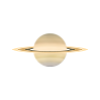
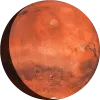
Jupiter: Visible from early morning until sunrise. Saturn: Visible from sunset until morning twilight. Mars: Visible from before midnight until sunrise.Stars
Notable stars include Sirius, Vega, and Capella, among the brightest stars currently visible.Meteor Showers
The Orionids meteor shower is active tonight, with meteors visible from about 21:11 to 10:47.Deep-Sky Objects
Notable deep-sky objects visible tonight include Beehive, Andromeda Galaxy (M31), and Orion Nebula (M42). They can be observed with binoculars or a small telescope.Solar System Objects
Planets
See which planets are currently visible and check their rise and set times.
Active Meteor Showers
Orionids
Meteor shower

The Orionids meteor shower is active from October 13 to November 12 and peaks around October 23.
For the complete list of meteor showers, open the Active Meteor Showers.
Satellite Flyovers
A short list of the brightest upcoming satellite flyovers.
No bright satellite flyovers are expected in the next hour.
For the complete schedule, open the Satellites page.
Brightest Stars
Five of the brightest stars currently visible in the night sky.
Sirius
Star
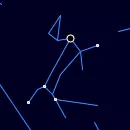
Sirius is the brightest star in the night sky, a binary star system located in the constellation Canis Major. Its brilliant white light is easily visible from Earth.
Vega
Star
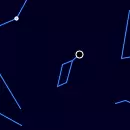
Vega, the fifth brightest star, is part of the constellation Lyra. It is one of the most luminous stars visible from Earth and a prominent member of the Summer Triangle asterism.
Capella
Star

Capella, the sixth brightest star, is a yellow giant located in the constellation Auriga. Its brightness and close proximity to the celestial north pole make it easily identifiable.
Rigel
Star
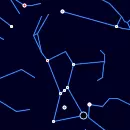
Rigel, the seventh brightest star, is a blue supergiant in the constellation Orion. It is one of the most massive and luminous stars visible to the naked eye.
Procyon
Star
Procyon, the eighth brightest star, is a binary system in the constellation Canis Minor. Its name means 'before the dog' as it rises just before Sirius, the 'Dog Star'.
Explore the complete list of the brightest stars.
Nebulae
Discover the brightest nebulae currently visible in the night sky.
M44
Open Cluster
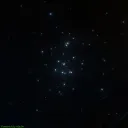
The Beehive Cluster, an open star cluster containing over 1,000 stars, located approximately 577 light-years away in the constellation Cancer.
Andromeda Galaxy (M31)
Galaxy
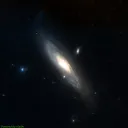
The Andromeda Galaxy, the nearest spiral galaxy to the Milky Way, containing over a trillion stars, located approximately 2.537 million light-years away.
Orion Nebula (M42)
Star cluster + Nebula
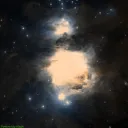
The Orion Nebula, a bright emission nebula and star-forming region, containing over 700 stars, located approximately 1,344 light-years away in the constellation Orion.
M47
Open Cluster
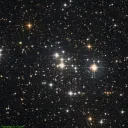
An open star cluster containing over 500 stars, located approximately 1,600 light-years away in the constellation Puppis.
M41
Open Cluster
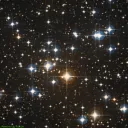
The Little Beehive Cluster, an open star cluster containing over 100 stars, located approximately 2,300 light-years away in the constellation Canis Major.
For a complete list with locations, brightness and photos, open the Nebulae page.