Sky Tonight
All you can find in the sky. Even clouds.
Sky Map
What’s Visible Tonight — November 1–2
- Sunset
- 12:28
- Stargazing
- 13:29–01:02
- Sunrise
- 02:03
Moon
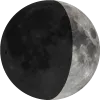
Waning Crescent · 43% illuminatedVisible 18:52–01:02
Moonlight should have little effect during this observing window. Away from city lights, more faint stars become visible.
Tonight’s Highlights
Jupiter / Moon — close Moon–planet pairing. observing window 22:43–01:02.
Mars / Moon — close Moon–planet pairing. observing window 21:10–01:02.
Saturn, the ringed planet, is suitable for observing now. It is a naked-eye target, with a telescope revealing its rings.
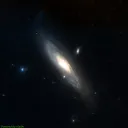
Andromeda Galaxy (M31) can be observed now. Under dark skies, binoculars reveal its bright central region.
Triangulum Galaxy (M33), a diffuse spiral galaxy, is already a good observing target. Wide-field binoculars and very dark skies are best.
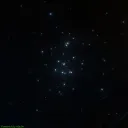
The star cluster Pleiades (M45), a familiar pattern of stars, is suitable for observing now. Binoculars show more stars.
Capella, a bright sky landmark, can be observed now. The naked eye is enough.
Beehive Cluster (M44), an open cluster of stars, can be observed from around 23:10. Binoculars bring out its stars.
Constellations to Spot Tonight
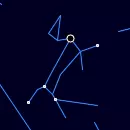
Cassiopeia: Five stars trace a distinctive W. The pattern is toward the north-west now; it remains favorably placed until around 00:30.
Taurus: Aldebaran marks one arm of the V-shaped Hyades. The pattern is toward the south-east now; it remains favorably placed until around 00:30.
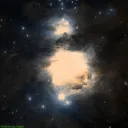
Orion: Three Belt stars sit inside a bright four-star outline. The pattern is toward the south-east now; it remains favorably placed until around 00:30.