
Deep-sky objects in Sagittarius
Sky Map
The sky above you at 19:21
This interactive sky map shows the positions of the brightest celestial objects from your location. Move it horizontally to follow how their positions change through the night.
IC4816
Nova star
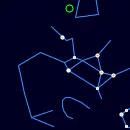
IC4816 is a nova star with apparent magnitude 4.50 in the constellation Sagittarius.
M24
Association of stars

The Sagittarius Star Cloud, a vast Milky Way star field and nebulous region, visible to the naked eye in the constellation Sagittarius.
M25
Open Cluster
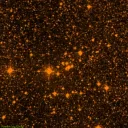
An open star cluster containing over 60 stars, visible to the naked eye under dark skies, located in the constellation Sagittarius.
NGC6530
Star cluster + Nebula

NGC6530 is a star cluster + nebula with apparent magnitude 4.60 in the constellation Sagittarius, spanning approximately 6 arcseconds in the sky.
M23
Open Cluster
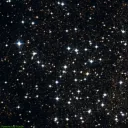
An open star cluster containing approximately 150 stars, located near the Lagoon Nebula in the constellation Sagittarius.
Lagoon Nebula (M8)
Nebula

The Lagoon Nebula, a large emission nebula and star-forming region, visible to the naked eye in the constellation Sagittarius.
M21
Open Cluster
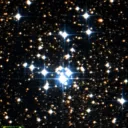
An open star cluster containing over 80 stars, located near the Trifid Nebula in the constellation Sagittarius.
Sagittarius Cluster (M22)
Globular Cluster

One of the brightest globular clusters in the night sky, containing over 70,000 stars, located in the constellation Sagittarius.
M55
Globular Cluster
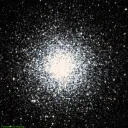
A globular cluster containing hundreds of thousands of stars, located approximately 17,300 light-years away in the constellation Sagittarius.
M18
Open Cluster
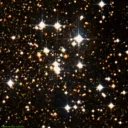
A young open star cluster containing over 20 stars, located approximately 4,900 light-years away in the constellation Sagittarius.
M28
Globular Cluster

A globular cluster containing hundreds of thousands of stars, located approximately 18,000 light-years away in the constellation Sagittarius.
M17
Nebula

The Omega Nebula, a bright emission nebula and star-forming region, located approximately 5,500 light-years away in the constellation Sagittarius.
NGC6716
Open Cluster

NGC6716 is an open cluster with apparent magnitude 7.50 in the constellation Sagittarius, spanning approximately 7.2 arcseconds in the sky.
NGC6520
Open Cluster

NGC6520 is an open cluster with apparent magnitude 7.60 in the constellation Sagittarius, spanning approximately 5.4 arcseconds in the sky.
IC1284
Nebula
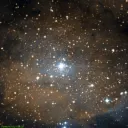
IC1284 is a nebula with apparent magnitude 7.70 in the constellation Sagittarius, spanning approximately 17 arcseconds in the sky.
M54
Globular Cluster
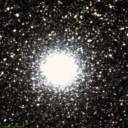
A globular cluster containing hundreds of thousands of stars, part of the Sagittarius Dwarf Elliptical Galaxy, located approximately 87,000 light-years away.
NGC6546
Open Cluster
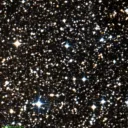
NGC6546 is an open cluster with apparent magnitude 8.00 in the constellation Sagittarius, spanning approximately 6.9 arcseconds in the sky.
NGC6647
Open Cluster
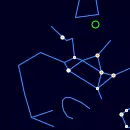
NGC6647 is an open cluster with apparent magnitude 8.00 in the constellation Sagittarius, spanning approximately 3.6 arcseconds in the sky.
NGC6469
Open Cluster
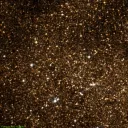
NGC6469 is an open cluster with apparent magnitude 8.20 in the constellation Sagittarius, spanning approximately 9 arcseconds in the sky.
M75
Globular Cluster
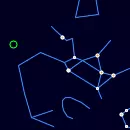
A globular cluster containing hundreds of thousands of stars, located approximately 67,500 light-years away in the constellation Sagittarius.
Data Credits
The deep-sky information on this page comes from the OpenNGC project developed by Matteo Verga. OpenNGC provides detailed catalog data for nebulae, galaxies, clusters and other deep-sky objects.
For details or contributions, visit the official repository: OpenNGC GitHub.